← The library Opening the sample... Get the first 9 minutes of Part 1 free, out of 137 minutes in the full title. It is the same recording. Enter your email and it starts playing right here. That link has expired, or we have already sent you a newer one. Enter your email and we will send you a fresh link. Check your inbox. We sent a link to . Tap it and the sample opens. Nothing there yet? Look in your spam or promotions folder, or send it again. You are in now. Refresh the page and start listening. 0:00 of --:-- This title is in your library. Every chapter is open: tap one and it plays there. Why People Cheat Whether you were cheated on, you cheated, or you lie awake afraid of either, you deserve something better than gossip and guesswork. Here is what the studies actually look at. 30-day money-back guarantee. If it is not for you, write to support within 30 days and you get every cent back.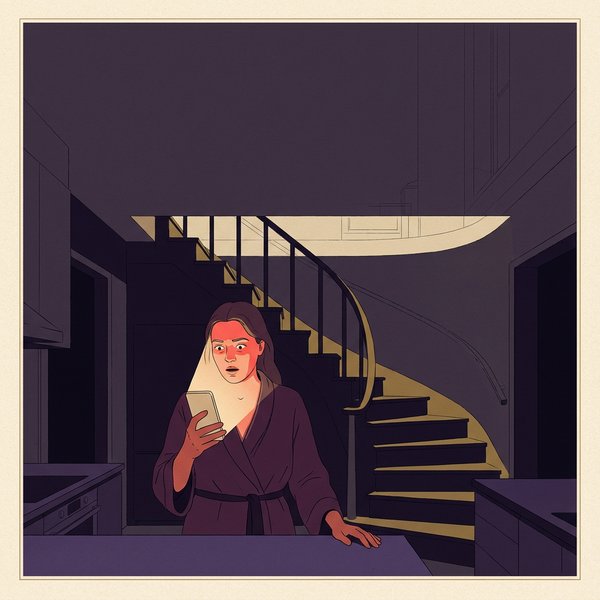 Sociosexuality.org · Audio Why People Cheat
Part 1 · 43 min Who cheats and why
Part 2 · 46 min What an affair does
Part 3 · 48 min After discovery
Why people cheat: what the research says about the reasons, the damage and what happens after
+ VAT where applicable
The house is silent at 2 a.m.
Your partner is asleep and their phone is lying face down on the nightstand. You're lying there next to them with a question you'd never say out loud, would they, could they, or have they already done it.
Or maybe it already happened. You found the message, or somebody told you, and the floor went out from under you. The first thing in your head wasn't even a word, it was just why?
Or maybe you're the one who did it. You know what you did. You've asked yourself why about a hundred times by now, and every answer you come up with sounds like an excuse, or else like a life sentence.
Three different spots to be standing in, and the same question sitting under all of them.
Why do people cheat?
Right behind that one comes the second question, the one about what you do now.
You've probably heard a lot of answers by now. Cheaters are just bad people. It's always about sex, or it's never about sex. Once a cheater, always a cheater. If they cheated, you must have pushed them there. Men are wired for it, and women only do it for love.
All of those answers come at you loud, and none of them were made with your actual life in mind.
Here is the thing. Researchers have studied infidelity carefully: the reasons people give, the chances it happens, what it does to everyone involved, and what couples do after it comes out.
Researchers have even looked at sociosexuality, which is how open someone is to sex without commitment, and how it ties into the risk of cheating. The link they found is a careful one, and it doesn't put the blame on any group of people.
Almost nobody lays this out clearly for the people who need it most. So we did.
What changes after you listen
Once you've listened, you'll have a calmer and clearer way to think about something that doesn't feel calm at all.
You will learn what the studies say about why people cheat and how often it happens, and the whole question gets a lot less foggy than it was when you started.
You will see where sociosexuality sits in all of this. A link between a trait and a risk isn't a verdict on any one person, and we'll show you why, along with why your own place on the spectrum is not a confession.
You will have words for what an affair does to the partner who was cheated on and to the person who cheated, and also what it does to the relationship itself. We take those harms one at a time, because they are not the same harm.
And you'll know what the research says about what comes after an affair is discovered, for the couples who stay together and for the ones who split up, and we won't tell you which of those is yours.
Maybe you're the one who got hurt, and you'll find understanding here, not blame. Maybe you're the one who did the hurting, and what you'll get is honesty, without excuses and without contempt either. And if you're mostly scared right now, there are facts here you can hold up against the stories your mind starts telling you at 2 a.m.
No lecture. No side taken. Just the research, laid out so you can use it.
Here is some of what you will find out
- The reasons people give researchers for cheating, put next to each other, so you don't have to keep looking for the single reason that explains all of it (Part 1)
- What the studies find about the odds of infidelity, and why odds are something you read across a lot of people and never a verdict on any one of them (Part 1)
- How sociosexuality figures into who cheats, explained without pointing the finger at any one group (Part 1)
- What your own spot on the sociosexuality spectrum tells you about infidelity risk, and what it doesn't tell you about your character (Part 1)
- Who cheats and why they cheat are separate questions, and you need an answer to both of them (Part 1)
- What Fincham and May pulled together in their 2017 review of infidelity research, one of the best-known overviews of the field, and what it means for you (Part 1)
- If you're afraid of being cheated on: what the research on reasons and chances can tell you about that fear, and the point where it can't tell you anything more (Part 1)
- Why a reason isn't the same thing as an excuse, and how you can hear what the research says without hearing a permission slip in it (Part 1)
- What an affair does to the partner who was cheated on, as the researchers who studied it describe it and not the way a talk show tells it (Part 2)
- What an affair does to the person who cheated, told straight, without anybody cheering them on or sneering at them (Part 2)
- What an affair does to the relationship itself, apart from what it does to either one of you, the bond between you (Part 2)
- How the partner, the one who cheated and the bond each come out of it, looked at one at a time so you can finally compare them (Part 2)
- If someone cheated on you, here are words for what happened, taken from the research and not from anybody's blame (Part 2)
- If you cheated: an honest account that doesn't excuse you or write you off (Parts 1 and 2)
- What the research says about couples who stay together after an affair comes to light (Part 3)
- What the research says about couples who split up after the affair comes out, and why that isn't treated here as a failure (Part 3)
- Staying and leaving have both been studied by researchers, and each path has something to teach you before you make your choice (Part 3)
- The difference between deciding in the first days after discovery and deciding once you understand what is going on (Part 3)
- Why "once a cheater, always a cheater" and "it meant nothing" both fall short as answers for your life
- How to talk about all of this, with a partner, a friend or yourself, in calm words instead of loaded ones
+ VAT where applicable
- 137 minutes of audio in 3 parts
- A printable PDF workbook
- Plays in your browser on any device, signed in
30-day money-back guarantee. If it is not for you, write to support within 30 days and you get every cent back.
What each part gives you
Part 1 · 43 minutes
Who cheats and why
The first thing everybody wants to know is why, so that's where this part starts. You'll hear what the studies find about the reasons people cheat, and about how likely infidelity is to happen in the first place. Then we get into sociosexuality, meaning how open someone is to sex without commitment, and how that openness connects to infidelity risk, which tells you nothing about whether a given person is good or bad. Maybe you're scared of being cheated on, and you'd like some facts to hold up against the fear. Maybe it happened to you and you need reasons that don't come back to blaming you. Or maybe you were the one who cheated, and you want to look at your own story honestly, with no excuses and no contempt either. Either way, by the end "why?" has a shape to it instead of a fog.
You walk away with
- What the research finds about why people cheat and how likely infidelity is
- How sociosexuality ties in with the risk of infidelity, and why that blames no group
- Why a risk that holds across lots of people isn't a verdict on you, or on any one person
- A reason is not an excuse, and you can hold both of those ideas in your head at the same time.
Part 2 · 46 minutes
What an affair does
This part looks at what an affair actually does, and who it does it to. We start with the partner who was cheated on and what research finds about the effects on them. Then the person who cheated, because their side deserves a fair hearing too. Then the relationship itself, which takes its own hit, separate from either of the two people in it. We go through these one at a time for a reason: when it all lands at once it's hard to sort out which pain belongs where, and this gives you the words to tell them apart. That holds whether you're the one who got hurt, the one who did the hurting, or someone trying to make sense of what happened to a friend, a parent or a partner. You should come away seeing the whole picture more clearly, and the people in it more fairly.
You walk away with
- What the research shows about how being cheated on affects the partner on the other side
- What research finds about the effects on the person who cheated
- How an affair affects the relationship itself
- Language for telling one kind of hurt apart from another
Part 3 · 48 minutes
After discovery
This next part covers what happens after the secret is out. We go through what the research has found about couples who stay together after the discovery, and about the ones who split up, and we don't tell you one of those is the right answer. Real couples take both roads and researchers have looked at both. Maybe you're at that point right now, trying to decide. This part won't decide for you. It gives you a better look at where each road tends to go, so you can make the call knowing more about it, not in the first wave of shock. And if you made that choice a long time ago, it may help you understand what came after.
You walk away with
- What research says about couples who stay together after discovery
- What research says about couples who part
- Why staying and leaving both deserve understanding, not judgment
- A calmer footing for decisions that matter
This is for you if…
- You were cheated on and you want to understand why it happened, and you don't want anyone telling you it was your fault.
- you cheated and you want a straight account of why it happens and what it does to people, without excuses and without anyone looking down on you
- You have never been cheated on, but you're afraid you will be, and lately that fear has been getting louder.
- you want to see how sociosexuality ties into infidelity risk, without anybody getting a label stuck on them
- You've found out, you're standing at the fork now, and you want to know what the research says about staying and what it says about parting.
- you like real research, clearly explained, more than hot takes
This is not for you if…
- You want someone to tell you whether to stay or leave.
- You want proof that your partner will or won't cheat, and we can't give you that, because no research can say it about one person.
- you want a list of tricks for catching a cheater, or for keeping one from straying
- you want an affair excused, or you want someone condemned for one; this title won't do either for you
- you're after a quick fix for a relationship that's in crisis right now
Why you can trust it
We built everything in this title on published research. Most of the weight sits on Fincham and May's 2017 review, which pulls the field's work on infidelity together into one overview, so that's where we started and what we kept coming back to.
Around this sit the studies that tie sociosexuality to infidelity, and we handle that link carefully. A pattern across a lot of people tells you about chances, it doesn't pass a verdict on any one person, and we never use it to blame a whole group.
We don't pick a side between the person who got hurt and the person who did the hurting, and we don't pick one between staying and leaving either. When the research is strong we tell you so, and when it's limited we tell you that too.
Built on the research: Fincham and May's 2017 review of infidelity research; studies linking sociosexuality and infidelity.
The workbook that comes with it
Listening is one thing, but the workbook is where you work out what it means for your own situation. Each part gets a single page with the key ideas, and after that come questions about your own life and room to write your answers down.
Hurt, guilty or afraid, wherever you're standing right now, you work through it at your own pace and what you write stays yours.
+ VAT where applicable
- 137 minutes of audio in 3 parts
- A printable PDF workbook
- Plays in your browser on any device, signed in
30-day money-back guarantee. If it is not for you, write to support within 30 days and you get every cent back.
Questions you may have
I was cheated on. Will this tell me it was my fault?
No. The title goes through the reasons people cheat and the chances of it, the way the research lays them out, and it doesn't put the blame on any group, and that includes you. Knowing why something happened is a different thing from deciding who had it coming.
I'm the one who cheated. Is this going to shame me?
No, and it won't excuse you either. What you get is an honest account of why infidelity happens and what it does, and that includes what it does to the person who cheated. We're after understanding here, which shame rarely gives anyone.
Is it going to tell me if I should stay or leave?
No. Part 3 goes through what the research says about couples who stay together and couples who split up, so you get a clear look at both. But the decision is yours, and it should be, because nobody who hasn't lived inside your relationship is in a position to make it for you.
Does it say people who score high in sociosexuality are the ones who cheat?
No. It explains how sociosexuality links to the risk of infidelity, and it takes care to spell out what that link means and what it doesn't mean. A pattern you see across lots of people tells you about chances, it doesn't tell you about any one person, and it doesn't put the blame on any group.
Nobody has ever cheated on me, I'm just scared it might happen someday. Is this one for me?
Yes. When you're afraid, the silence tends to fill up with worst-case stories. What the studies actually find about why people cheat and how likely it is gives you something real to hold up against those stories, and it can make it easier to start a calm conversation with your partner.
Is this research, or someone's opinion?
Research. We built this mostly on Fincham and May's 2017 review of the infidelity research, plus the studies that tie sociosexuality to cheating. When the research is solid we tell you that, and when it's thin we tell you that as well.
Can I listen with my partner?
Yes, you can do it together, as long as you both feel ready. It can help to listen on your own first, though, because the same words can hit each of you in a very different way. The workbook gives you each room to write your own answers before you share anything with the other.
How do I listen?
Once you've got your title, it sits in your library right here on the site, and you can play each part in the page itself on your phone, your tablet or your computer, so there's no app you need to install first.
Can I listen in the car, or when I'm out on a walk?
Yes. Open your library on your phone while signed in, and every part plays anywhere you've got a signal. It remembers where you stopped, so you can pause in the car and carry on later.
Do I need a password?
No. You sign in with the same email address you used when you bought, and we send a one-time link to that address so you can get in. You don't have a password to keep track of.
What is the workbook?
There's a PDF you can print to go along with the audio. It sets out the key ideas from each part, gives you questions to answer about your own life, and leaves space to write, either on paper or right on screen if you'd rather not print it.
Is this therapy, or medical advice?
No. It is education: the published research, explained clearly so you can use it. If you are in crisis or need care, a licensed professional is the right next step, and this can sit alongside that work.
What if it is not for me?
Then you get your money back. For 30 days after you buy a title, write to support and we refund you in full. You do not have to give a reason. A membership started at the 6-month price is covered too: the trial charge and the payment for its first months, for 30 days from the trial charge. The plain trial and the monthly membership are not covered by this guarantee.
My card was declined. What now?
Then the money was not taken from your card. Try again in a few minutes, or try another card. If it is declined again, your bank can tell you why: some banks turn down a first payment to a new shop until you say yes in their app. If it still does not go through, write to support and we will help.
So this is where we have got to.
You have a question that will not leave you alone. Maybe it showed up the night you found out. Maybe it has followed you since you did something you regret. Maybe it lives in the small hours, when the phone is face down on the nightstand.
Why do people cheat, and what are you supposed to do now?
The research does have careful answers. They aren't the loud ones you've been handed so far, they're calmer and fairer and a lot more useful to you.
You could go on guessing, and go on turning the same few lines over in your head late at night. Or you could give it three evenings, or three long walks, and find out what is really known.
You will come out the other side with clear words for what happened or what you fear, a fairer way to see everyone involved, yourself included, and a steadier footing for whatever you decide.
That is why we made Why People Cheat, and we hope you'll give it a listen.
+ VAT where applicable
- 137 minutes of audio in 3 parts
- A printable PDF workbook
- Plays in your browser on any device, signed in
30-day money-back guarantee. If it is not for you, write to support within 30 days and you get every cent back.
P.S. Understanding why people cheat doesn't excuse it. And hearing what the research says about couples who stay together or split up isn't the same as somebody telling you which one to pick. This title gives you the understanding. The choices stay with you, which is where we think they belong.