← The library Opening the sample... Get the first 8 minutes of Part 1 free, out of 90 minutes in the full title. It is the same recording. Enter your email and it starts playing right here. That link has expired, or we have already sent you a newer one. Enter your email and we will send you a fresh link. Check your inbox. We sent a link to . Tap it and the sample opens. Nothing there yet? Look in your spam or promotions folder, or send it again. You are in now. Refresh the page and start listening. 0:00 of --:-- This title is in your library. Every chapter is open: tap one and it plays there. Desire During Pregnancy and After a Baby Maybe your sex life changed the day the test came back positive, or the day you brought the baby home, and nobody ever told you what to expect. We put this together for you, so start here. 30-day money-back guarantee. If it is not for you, write to support within 30 days and you get every cent back.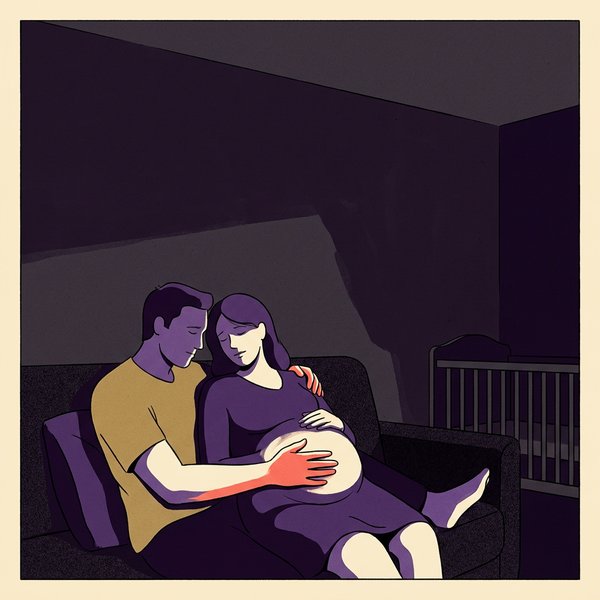 Sociosexuality.org · Audio Desire During Pregnancy and After a Baby
Part 1 · 45 min Pregnancy
Part 2 · 45 min The first year after birth
Desire during pregnancy and after the baby comes, and what's normal for both of you
+ VAT where applicable
Three in the morning.
The baby finally went back down. You're lying in the dark next to the person you made this little human with, and you're wide awake now. You love them, you're on the same team, and you honestly can't remember the last time either of you reached for the other.
Or you might still be pregnant. Some weeks you want your partner more than you have in years, and other weeks the idea of being touched makes you want to go sleep in another room. You have no way of knowing which kind of week is coming next.
Or maybe you're the partner in this. You want to be kind about it, and you don't want to push, but some part of you keeps wondering if things will ever get back to how they were, and then you feel selfish for wondering at all.
This is what nobody tells you at the baby shower.
Pregnancy and a new baby change desire, and they change it for both of you, often in ways that make no sense from one month to the next.
And almost nobody explains it.
Your midwife asks how the baby is sleeping and feeding, and the books are all about diapers and naps. Friends tell you it gets better, or they don't say anything. So each of you ends up carrying the same private question alone.
Is this normal?
Is it normal to want more, or to want nothing at all? To feel like your body belongs to the baby now, or to miss your partner while they're sitting right next to you on the couch?
Somebody has studied exactly this. Back in 1999 von Sydow did a big review that gathered up the studies on sex during pregnancy and after the birth, and later researchers followed couples through the months after the baby came home.
Most of that research never gets to the couples going through it. It stays in journals, written by researchers for other researchers, and meanwhile the two of you are up at night next to a baby monitor, both wondering about something you can't quite figure out how to bring up.
So we laid it out clearly, for both of you.
What changes after you listen
Once you've listened, what's been happening in your sex life stops looking like something the two of you got wrong and starts to make sense.
You'll see how desire tends to change from one trimester to the next during pregnancy, and why it happens. It isn't a rule you're supposed to fit into. Think of it more as a map, so whatever you're feeling this week has a spot on it.
You will know what the first year after the birth tends to do to two people, the tiredness, a body that has changed, the feeding, and you will hear what the studies find about when desire comes back, so the two of you can stop measuring yourselves against a date that someone made up.
You will come away with words for it, the kind that let one of you say I am not there yet without it landing as rejection, and let the other say I miss you without it coming across as pressure.
You will also know what to do with the silence. The weeks when nobody reaches for anybody do not have to be empty weeks. There are other ways to stay close, and this title helps you find the ones that fit the two of you right now.
And you'll start seeing each other more fairly. If you're the one who wants less, that doesn't make you cold, and wanting more doesn't make your partner selfish either. This is one of the biggest changes a couple can go through, and the two of you are each going through it your own way.
No pressure from us, and no schedule you have to keep up with. We can't promise things go back exactly how they were. What we can give you is what the research shows, explained gently, plus things to try together.
Here is some of what you will find out
- How your desire is likely to shift from the first trimester into the second and then the third, and why each of those stages can feel so different from the last (Part 1)
- Why your desire might head somewhere you never expected while you're pregnant, and why that makes sense (Part 1)
- What is going on in the body and the mind that drives those changes (Part 1)
- The partner who isn't pregnant can feel their own desire shift too, and here's what the research says about why that happens (Part 1)
- We took the big 1999 review of the research on pregnancy and sexuality and walked through what it found, in normal language (Part 1)
- How to tell your partner what you want this month when it isn't what you wanted last month (Part 1)
- Why a change in desire while you're pregnant doesn't measure how much you love each other (Part 1)
- The things you might feel too shy to ask your midwife about, and what the research has to say on each (Part 1)
- How tired you both are in that first year, and what it does to wanting each other (Part 2)
- Why touch can feel different after giving birth, and how changes in the body play into it (Part 2)
- How feeding a baby can affect desire, and why it's worth talking about together (Part 2)
- What research on couples after childbirth shows about when desire tends to come back (Part 2)
- Why your timeline doesn't have to match another couple's, and why comparing can make it harder (Part 2)
- How the two of you can stay close through the months when sex isn't happening (Part 2)
- Why it's normal for one of you to want it now while the other isn't there yet, both at once (Part 2)
- What to say to the partner who feels pushed, and what to say to the partner who feels pushed away (Part 2)
- What the research on that first year says about the second conversation, the one you have after you've both agreed you're fine (Part 2)
- Talking about desire again when neither of you has slept much (Part 2)
+ VAT where applicable
- 90 minutes of audio in 2 parts
- A printable PDF workbook
- Plays in your browser on any device, signed in
30-day money-back guarantee. If it is not for you, write to support within 30 days and you get every cent back.
What each part gives you
Part 1 · 45 minutes
Pregnancy
This part follows desire through pregnancy, one trimester at a time. You will learn how wanting tends to change from the early weeks to the middle months to the end, and why: what is happening in the body, what is happening in the mind, and what is happening between two people who are about to become parents. You will hear what von Sydow's 1999 review brought together about sexuality in pregnancy, explained in plain words. Whether you are the one who is pregnant or the one beside them, you will come away knowing that what you feel this week has a reason, and that it may well change again. That alone can take a lot of worry out of the bedroom.
You walk away with
- Your wanting may shift from one trimester to the next
- There are body and mind reasons behind each change
- Both partners can feel their desire shift
- Gentle words you can use to tell each other where you are this month
Part 2 · 45 minutes
The first year after birth
This part covers the first year after the baby arrives, when questions about sex can feel like ones you can't ask anyone. We walk you through what tiredness does to desire, how the body changes after birth can change the way being touched feels, and where feeding a baby fits into all of that. Then we go over what studies of couples after birth find about when desire comes back, which gives you something firmer to measure against than guesses or what a friend's sister went through. The bigger thing we hope you get from it is a clearer view of each other during this time, the partner who isn't ready yet and the partner who misses being close, and some ways to stay near each other while the two of you find your way back.
You walk away with
- How tiredness, body changes and feeding all play a part in desire after birth
- What the research says about when desire returns
- Why your timeline doesn't have to line up with anybody else's, yours is your own.
- Staying close to each other while you wait for sex to come back
This is for you if…
- You're pregnant, and your desire has shifted in ways you didn't see coming.
- your partner is pregnant and you would rather understand what is going on with them than keep guessing
- you have a new baby and your sex life has gone silent, or strange, or both
- you want to know what is normal without being handed a deadline
- you and your partner want some calm words to share for the thing you both keep not quite talking about
- you like research explained clearly more than advice from a stranger online
This is not for you if…
- you are hoping for medical advice about your pregnancy, the birth or how you recover afterwards, and that is something for your midwife or your doctor, not for us
- you're hoping for a date when everything will feel back to normal again
- you want someone to tell you which partner is the right one for you
- you're after sex tips or erotica; what you'll get here is research, told gently and warmly
- you're looking for a quick fix for a relationship that's in crisis right now
Why you can trust it
We built this title on published research. Most of it rests on von Sydow's 1999 review of sexuality during pregnancy and after birth, which pulled together the studies that had been done up to then.
Next to that we use later studies that followed couples after the birth, looking at what happens to the two of you and your sex life in the months once the baby is here.
We tell you what the research looks at and where it runs out. We won't tell you what you should be feeling, or when you should be feeling it. What we're after is that both of you understand what's going on, and neither of you gets pushed.
Built on the research: von Sydow's 1999 review of sexuality in pregnancy and after birth; later couple studies after birth.
The workbook that comes with it
In the workbook each of you gets somewhere calm to think it through. Every part opens with the key ideas on a single page, and after that come questions about your own experience, like what has changed for you and what you miss, and what you need from each other right now.
We made pages where the two of you fill in your answers side by side, so you each get to see what the other wrote before you try to talk about it. Sometimes reading it on paper is a lot easier than saying it out loud at 3 a.m.
+ VAT where applicable
- 90 minutes of audio in 2 parts
- A printable PDF workbook
- Plays in your browser on any device, signed in
30-day money-back guarantee. If it is not for you, write to support within 30 days and you get every cent back.
Questions you may have
Is this one meant for the pregnant partner, or for the other partner?
For both of you. Pregnancy and a new baby change desire on each side of the relationship, and the title talks to the pregnant partner and the other one alike. You can listen together, or each on your own, and it works either way.
I'm already past the birth. Is Part 1 still any use to me?
Yes. If you know what happened to desire while you were pregnant, it is easier to make sense of where you are now. You can also skip straight to the first year after birth, since Part 2 stands on its own.
Will it tell me when it's safe to start having sex again after the baby comes?
No, and we won't pretend to answer that one. When it's safe is a medical question, so ask your midwife or doctor. What this title covers is desire: what changes, why it changes, and what research on couples finds about when it comes back.
Will listening to it make me feel like I am doing something wrong?
No, it's built to do the opposite. We treat changes in desire, whether it goes up or down, as part of pregnancy and new parenthood, and not as anybody failing at anything.
Say my partner wants sex and I don't. Is this going to take their side?
No, it doesn't take sides. What it does is help each of you get what the other one is going through, and it gives you both some words to use that won't come across as pressure, or as rejection either.
We're same-sex parents, or we adopted our baby. Does any of this still apply to us?
Some of it will be. Part 1 deals with pregnancy itself, so that part may not fit you. Part 2 covers the tiredness and the big change of the first year with a baby, and any couple can go through that. We stay with what the research covers and we tell you so.
Is the research old?
The main review we lean on is from 1999, and it pulled together the studies that came before it. Later studies of couples after the birth are part of what we draw on too. We tell you what the research covers and where it still leaves questions open.
We're still trying to get pregnant. Is it too early for this?
Not at all. It helps to know ahead of time how desire can shift during pregnancy and through the first year, so those months catch neither of you so off guard. You can read Part 1 and Part 2 as a look ahead.
How do I listen?
Once you've got your title, it sits in your library right here on the site, and you can play each part in the page itself on your phone, your tablet or your computer, so there's no app you need to install first.
Can I listen in the car, or when I'm out on a walk?
Yes. Open your library on your phone while signed in, and every part plays anywhere you've got a signal. It remembers where you stopped, so you can pause in the car and carry on later.
Do I need a password?
No. You sign in with the same email address you used when you bought, and we send a one-time link to that address so you can get in. You don't have a password to keep track of.
What is the workbook?
There's a PDF you can print to go along with the audio. It sets out the key ideas from each part, gives you questions to answer about your own life, and leaves space to write, either on paper or right on screen if you'd rather not print it.
Is this therapy, or medical advice?
No. It is education: the published research, explained clearly so you can use it. If you are in crisis or need care, a licensed professional is the right next step, and this can sit alongside that work.
What if it is not for me?
Then you get your money back. For 30 days after you buy a title, write to support and we refund you in full. You do not have to give a reason. A membership started at the 6-month price is covered too: the trial charge and the payment for its first months, for 30 days from the trial charge. The plain trial and the monthly membership are not covered by this guarantee.
My card was declined. What now?
Then the money was not taken from your card. Try again in a few minutes, or try another card. If it is declined again, your bank can tell you why: some banks turn down a first payment to a new shop until you say yes in their app. If it still does not go through, write to support and we will help.
So this is where we've got to.
Something big has happened between the two of you, or it is still happening as you read this. A pregnancy, then a baby, and a whole new life living in your house with you.
Somewhere in the middle of all this, something else shifted between you too, and it's harder to put your finger on. How much you want each other. Or how much you don't right now.
You could go on guessing about it, lying awake and wondering by yourself whether this is normal, and whether it ever passes.
Or you can take a couple of evenings, or a couple of walks with the stroller, and find out what the research actually shows about desire during pregnancy and in the first year after the baby comes.
What you get at the end is some words for what is happening to you both, a gentler way of looking at each other, and a few things you might try once you are both ready for that.
You won't be heading into the hardest conversation of the year with nothing to go on, either. The two of you will have heard the same thing, put calmly and in the same words, and starting from there is a lot easier.
That is why we made Desire During Pregnancy and After a Baby, and we hope you will listen to it, maybe the two of you together.
+ VAT where applicable
- 90 minutes of audio in 2 parts
- A printable PDF workbook
- Plays in your browser on any device, signed in
30-day money-back guarantee. If it is not for you, write to support within 30 days and you get every cent back.
P.S. Desire changes in pregnancy and after a baby, and it changes for both of you, which is why we wrote this title to treat those changes as part of what you are going through rather than as something gone wrong. It walks you through what tends to shift, the reasons behind it, and what the studies find about when desire usually returns, so the two of you are not left guessing on your own.