← The library Opening the sample... Get the first 9 minutes of Part 1 free, out of 134 minutes in the full title. It is the same recording. Enter your email and it starts playing right here. That link has expired, or we have already sent you a newer one. Enter your email and we will send you a fresh link. Check your inbox. We sent a link to . Tap it and the sample opens. Nothing there yet? Look in your spam or promotions folder, or send it again. You are in now. Refresh the page and start listening. 0:00 of --:-- This title is in your library. Every chapter is open: tap one and it plays there. Sexless Marriage: How It Happens and What the Research Shows This is for you if sex has stopped in your marriage and you want to understand how it got this way before you decide anything about it. 30-day money-back guarantee. If it is not for you, write to support within 30 days and you get every cent back.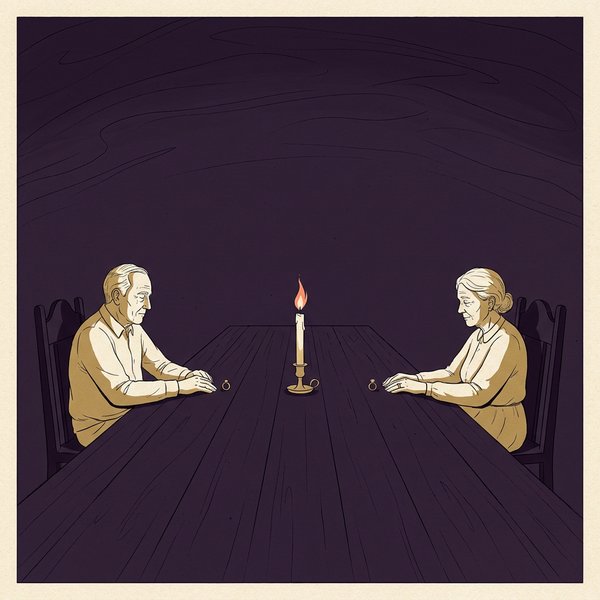 Sociosexuality.org · Audio Sexless Marriage
Part 1 · 45 min How it starts
Part 2 · 44 min What it does to each partner
Part 3 · 45 min The choices people face
How a marriage stops having sex, and what the research says about it
+ VAT where applicable
Maybe you can remember the last time.
Or maybe you can't, and that's the part that scares you.
No one chose this. Neither of you sat down one night and agreed to stop. It thinned out a little at a time, through a busy month, a new baby, a hard year at work, an illness, and a few evenings when one of you said no and neither of you brought it up the next morning.
And then one day you looked up and it had been a long time, longer than you would want to admit to anyone, maybe even to yourself.
It's there in the house with you now. It's in how you say goodnight, and in which one of you goes to bed first, and in that careful gap you both leave in the middle of the mattress.
Maybe it's 2 a.m. and you're lying awake next to the person you've built a whole life with, and somehow you feel more alone than you ever did back when you were single.
Then the questions start, usually in no particular order. Is this normal? Is it my fault, or theirs? Can it come back, should I accept it, should I go?
Those are big questions, and you deserve more than a quick answer from some stranger on the internet.
Here is something you may not have been told: researchers have studied sexless marriage directly.
In 1993 a researcher named Donnelly published a study of sexually inactive marriages, and since then more research has looked at how often married couples have sex and what that has to do with how satisfied they feel.
The research won't tell you what to do, and we won't either.
But it can help you understand what has happened, what it is doing to each of you, and what choices people in your situation actually face. Almost nobody lays it out clearly. So we did.
What changes after you listen
Once you've listened, it will make sense how your marriage ended up where it is now, and that isn't about pinning blame on either of you.
You will know the usual ways couples end up in a sexless marriage, whether that's rejection cycles, children, health or stress, and you'll be able to look back over your own story and pick out which of those paths you've already walked.
You will have words for what this is doing to you, and to your partner too. The research looks at wellbeing, resentment and loneliness on both sides of the marriage, and you will get to look at them the same way.
You'll see your options more clearly: rebuilding, accepting, opening up, ending. For each one you'll hear what the research says, laid out evenly, and none of them gets pushed on you.
You will be able to think about what comes next from a steadier place, working from the facts and not from fear.
You can also stop treating it as a private shame. Researchers study sexless marriages, describe them and take them seriously, so this is not some secret failure that happened only to you.
And if you choose to raise it with your partner, you will have a calmer place to start the conversation from.
We're not going to tell you to stay, and we're not going to tell you to leave. We can't promise this brings the sex back either. What you get is understanding, so whichever way you go, you go with your eyes open.
Here is some of what you will find out
- The usual ways an active marriage drifts into a sexless one, and how to tell which of them you and your partner are on (Part 1)
- How a rejection cycle gets going, and the things that keep it going round (Part 1)
- What kids can do to a couple's sex life, told without putting it on either of you (Part 1)
- How health and stress wear down a couple's sex life over time (Part 1)
- How a marriage drifts into silence when neither of you ever chose it (Part 1)
- What a 1993 study of sexually inactive marriages was trying to figure out (Part 1)
- What the research says a sexless marriage does to each partner's wellbeing (Part 2)
- How resentment builds up in a sexless marriage, for the partner who wants more and for the one who doesn't (Part 2)
- Why a marriage can look fine from the outside and still leave you lonely inside it (Part 2)
- What the research says about the one of you who misses sex, and the one who doesn't (Part 2)
- Words that finally fit the loneliness, so you can say it out loud to someone, whatever you end up deciding (Part 2)
- What the research says about finding your way back to sex together after a long stretch without it (Part 3)
- What the research says about staying in a marriage without sex (Part 3)
- What the research says about opening up a marriage (Part 3)
- What research says about ending it (Part 3)
- How to weigh four very different choices without anyone pushing you toward one (Part 3)
- What the research after Donnelly's study found about how often couples have sex and how happy they are in the marriage
- The questions worth asking yourself before you decide anything at all
- Before you decide where to go from here, it helps to understand how you got here.
+ VAT where applicable
- 134 minutes of audio in 3 parts
- A printable PDF workbook
- Plays in your browser on any device, signed in
30-day money-back guarantee. If it is not for you, write to support within 30 days and you get every cent back.
What each part gives you
Part 1 · 45 minutes
How it starts
This part starts with the question most people ask first, which is how did we get here. You'll learn the common paths by which an active marriage turns into a sexless one, and they are mostly ordinary ones: rejection cycles, children, health and stress. A few turned-down evenings can grow into a pattern before either of you has noticed it. The arrival of children can change a couple, and health and stress can take up the room where sex used to be. You'll also hear about Donnelly's 1993 study of sexually inactive marriages. By the end you should be able to tell your own story more clearly, and to see that a marriage can go silent without anyone deciding it should, which can take some of the blame out of the room.
You walk away with
- The paths that most often lead in: rejection cycles, children, health and stress
- How a pattern can form without anyone choosing it
- A way to tell your own story more clearly
- Less blame, more understanding
Part 2 · 44 minutes
What it does to each partner
Here the focus moves to what a sexless marriage does to the people inside it. You will hear what studies find about wellbeing, resentment and loneliness, for both partners: the one who misses sex and the one who does not. You will see where resentment can come from on each side, and why you can feel lonely while sharing a bed with someone. This part does not try to scare you. It tries to name things clearly, because things that have a name are easier to talk about. If you have been carrying this alone, you may hear your own experience described clearly for the first time. And you may hear your partner's experience too, in a way that changes how you see them.
You walk away with
- What research says about wellbeing, resentment and loneliness on both sides
- Both partners' experiences, described fairly
- Words for the feelings you find hard to say out loud
- A fairer view of your partner's side
Part 3 · 45 minutes
The choices people face
This part is about the choices people in a sexless marriage end up facing, which are rebuilding, accepting, opening up or ending it. We go through what the research says about each one and we lay it out evenly, so none of them gets pushed on you. You'll see what each road involves and the questions it raises, and what it might mean for you and your partner. We're not going to tell you to stay or to leave, and we don't rank the four. What you get is a clear, fair picture of all of them, so that whatever you decide comes from understanding and not from being worn out or scared. You should come away steadier, with some honest questions to carry into your next step.
You walk away with
- Four choices: rebuilding, accepting, opening up, ending
- What the research says about each road, laid out evenly
- No choice pushed on you
- Questions you can honestly take with you into whatever you do next
This is for you if…
- You're in a marriage where sex has stopped, or almost stopped, and you want to understand what happened.
- You're the partner who still misses sex, and most days you feel like you're carrying that on your own.
- You're the one who stopped wanting it, and now you feel guilty about it, or blamed for it, or both.
- you're weighing your options and you want the facts first, before you decide anything at all
- you want plain research, not a lecture about what you should do
- you want words for a thing in your marriage you have never managed to explain to anyone else
This is not for you if…
- you want someone else to decide for you whether to stay or go
- You want someone to promise you that sex will come back.
- you are hoping for proof that the problem is all your partner's fault
- you'd rather not hear every choice laid out fairly, even the ones you'd never make yourself
- you're in danger at home. If so, please reach out to local help first, before anything we can offer.
Why you can trust it
We built this title on the published research on sexless marriage, starting with Donnelly's 1993 study of sexually inactive marriages and working out from there into the later work on how often married couples have sex and how that ties in with how satisfied they are.
We keep to what that research covers. That means how a marriage ends up sexless, what it does to each of you, and what is known about the choices people in your spot face. Where something is our opinion, we say so and don't pass it off as science.
We don't take sides here. We won't pick between you and your partner, or between staying and leaving, or between keeping things monogamous and opening up. Each choice gets described evenly so the decision stays with you.
Built on the research: Donnelly's 1993 study of sexually inactive marriages; later research on marital sexual frequency and satisfaction.
The workbook that comes with it
The workbook is a private place to do your thinking. Each part puts the key ideas on one page, and then it asks you about your own marriage: which paths brought you here, what it has cost you, and what you want now.
In Part 3, it helps you lay out the four choices side by side and write down what each one would mean for you, honestly, without anyone watching. If you decide to talk to your partner, it also gives you a page to start from.
+ VAT where applicable
- 134 minutes of audio in 3 parts
- A printable PDF workbook
- Plays in your browser on any device, signed in
30-day money-back guarantee. If it is not for you, write to support within 30 days and you get every cent back.
Questions you may have
Is this going to tell me whether I should stay or go?
No. That's your call to make, not ours. This title walks through how a marriage ends up sexless, what that does to each of you, and what the research says about the choices people in your spot face. We lay them out evenly and leave the deciding to you.
Will this bring sex back into my marriage?
We cannot promise that, and we would not trust anyone who did. What it gives you is understanding: how you got here, what it is doing to both of you, and what the options look like. That understanding is useful whatever you decide.
Does it say whose fault it is?
No. We look at the usual ways couples end up in a sexless marriage, like rejection cycles, having children, health problems and stress, and we don't use any of them to pin blame on someone. What each of you has been through counts as real.
Is this going to push me toward opening up the marriage?
No. Opening up is one of four choices we describe in Part 3, along with rebuilding, accepting and ending, and each one gets the same fair treatment. We don't present any of them as the answer.
I stopped wanting sex, not my partner. Is this title for me as well?
Yes, this one is for both of you. Part 2 goes into what a sexless marriage does to each partner, and that includes you, the one who stopped wanting it. You won't find yourself cast as the problem here.
Should I listen with my spouse?
You decide that. A few parts might land easier if you hear them on your own first. And if you do end up talking about it, the workbook gives you a calm spot to begin. There's no right way to use it.
We're not married, but we've been together a long time. Does this still apply to us?
The research we drew on looked at married couples, so that's how the title reads. But if you've been together a long time and sex has stopped, the paths in, the effects and the choices we describe may still feel familiar to you.
Sex hasn't stopped altogether for us, it just happens rarely now. Is this still meant for me?
Yes, we think so. When sex has become rare and the distance looks more like a pattern than one bad month, what we describe here about how couples get there, what it does to each partner and the choices people make could help you see where you are now and where things might go.
How do I listen?
Once you've got your title, it sits in your library right here on the site, and you can play each part in the page itself on your phone, your tablet or your computer, so there's no app you need to install first.
Can I listen in the car, or when I'm out on a walk?
Yes. Open your library on your phone while signed in, and every part plays anywhere you've got a signal. It remembers where you stopped, so you can pause in the car and carry on later.
Do I need a password?
No. You sign in with the same email address you used when you bought, and we send a one-time link to that address so you can get in. You don't have a password to keep track of.
What is the workbook?
There's a PDF you can print to go along with the audio. It sets out the key ideas from each part, gives you questions to answer about your own life, and leaves space to write, either on paper or right on screen if you'd rather not print it.
Is this therapy, or medical advice?
No. It is education: the published research, explained clearly so you can use it. If you are in crisis or need care, a licensed professional is the right next step, and this can sit alongside that work.
What if it is not for me?
Then you get your money back. For 30 days after you buy a title, write to support and we refund you in full. You do not have to give a reason. A membership started at the 6-month price is covered too: the trial charge and the payment for its first months, for 30 days from the trial charge. The plain trial and the monthly membership are not covered by this guarantee.
My card was declined. What now?
Then the money was not taken from your card. Try again in a few minutes, or try another card. If it is declined again, your bank can tell you why: some banks turn down a first payment to a new shop until you say yes in their app. If it still does not go through, write to support and we will help.
So this is where things stand right now.
Something you and your partner used to share has stopped, and it was not a choice you made but something that crept in, and we know it now shapes the whole house.
Maybe you've got questions you haven't asked anybody yet. Is this normal? How did we end up here? What's it doing to me, and is there anything I can do about it?
You're not the first to ask these questions. Researchers have been studying sexually inactive marriages since Donnelly's 1993 study, looking at how it starts, what it does to people, and what they end up choosing.
You can go on turning this over alone at 2 a.m. Or you could give it three evenings, or three walks, and find out what is actually known about it.
You'll finish it with a clearer sense of how the two of you ended up here, some words for what you've been feeling, and an honest look at each of the roads still open to you.
You might talk with your partner. You might wait a while, or decide something big about the marriage, and whichever it turns out to be you'll have chosen it instead of drifting there.
The next step is your call. This title is just here to help you see it clearly.
That's why we made Sexless Marriage. We hope you'll give it a listen.
+ VAT where applicable
- 134 minutes of audio in 3 parts
- A printable PDF workbook
- Plays in your browser on any device, signed in
30-day money-back guarantee. If it is not for you, write to support within 30 days and you get every cent back.
P.S. Marriages often go sexless with neither partner deciding it should happen, and before you can decide anything you need to understand how yours got there. This title walks through the paths in and what the change does to each of you, then lays out the choices couples face, though it leaves the choosing to you.