← The library Opening the sample... Get the first 9 minutes of Part 1 free, out of 136 minutes in the full title. It is the same recording. Enter your email and it starts playing right here. That link has expired, or we have already sent you a newer one. Enter your email and we will send you a fresh link. Check your inbox. We sent a link to . Tap it and the sample opens. Nothing there yet? Look in your spam or promotions folder, or send it again. You are in now. Refresh the page and start listening. 0:00 of --:-- This title is in your library. Every chapter is open: tap one and it plays there. Sex, Love and Dating After 60 Maybe you've wondered if desire is supposed to be over by now, or if it's too late to start again. Researchers simply asked people, and here's what they found. 30-day money-back guarantee. If it is not for you, write to support within 30 days and you get every cent back.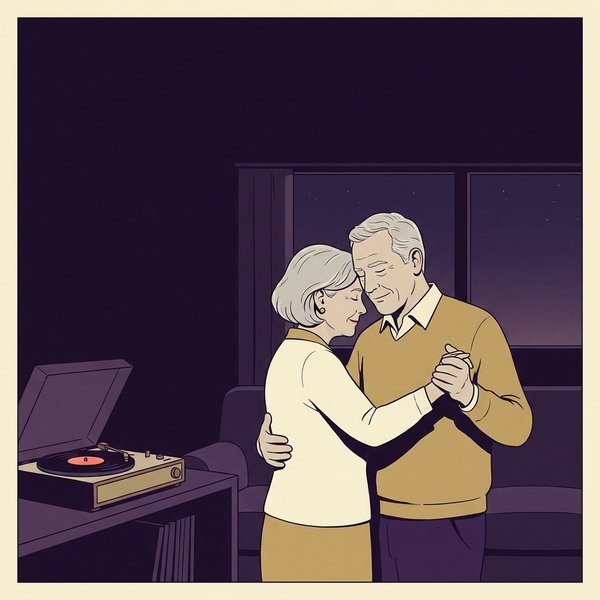 Sociosexuality.org · Audio Sex, Love and Dating After 60
Part 1 · 43 min What older adults actually do
Part 2 · 44 min Long marriages
Part 3 · 49 min Starting again
Sex, love and dating after 60: what the research actually found
+ VAT where applicable
A calm evening at home.
You've been married to each other for decades now. You know how they take their coffee, how they snore, what they're most afraid of, and at some point sex just stopped being part of the week without either of you ever deciding that it should.
And now and then the question comes up. Is this what happens to couples like us, maybe to everyone, or did we let go of something we could have held on to?
Or maybe you're on your own now. Divorced after a long marriage, or widowed after years of looking after someone you loved. And lately a small thought keeps turning up that surprises you a little: could I meet someone? Would I even know how to go about it? Am I allowed to want that?
This is what our culture tends to tell you about it.
On screen, desire mostly belongs to the young. Jokes about older people and sex are mostly just jokes. And in a short appointment, the subject may never come up.
So the question stays unasked, and we end up filling in the answers ourselves.
That sex after 60 is pretty much over. That wanting it anyway is a little embarrassing. That a long marriage without it is what time costs you, and dating at your age is for braver people than you.
But researchers did something simple. They asked.
In 2007, Lindau and colleagues published a national survey of sexuality in older adults in the United States, and it wasn't built on guesses or stereotypes but on what older adults told the researchers about their own sex lives and their own desire.
You deserve to know what they found, and to hear it straight from people who take the subject and you seriously, without a headline squeezing it down or a pep talk smoothing it over.
That survey rarely makes it into ordinary conversation. So we laid it out clearly, along with what it means for long marriages and for starting again.
What changes after you listen
Once you've listened, the yardstick changes: instead of holding yourself up to a stereotype, you hold yourself up to what older adults actually say about their own lives.
You will know what the large surveys show about sex and desire after 60, which is neither the slogan about staying young nor the warning about decline, but the picture as well as the research can draw it so far.
If you're in a long marriage, you'll come away understanding how health and habits and closeness all shape a sex life after decades together. You'll see what tends to change, and you'll have words for it that don't put the blame on either one of you.
If you are starting again after a divorce, or after losing a partner, you will have a calmer way to think about dating late in life. We cover what it is like to begin again, the questions that tend to come up, and how you might meet them.
Whichever of those is you, you're not the only one asking. The things you wonder about late at night are the same things researchers thought were worth asking older adults all across a country, so they're hardly odd questions to carry.
You will have permission, too. Permission to want what you want at this age, or not to want it, without anyone's script.
And you will be able to talk about it. With a spouse of forty years. With someone new. With yourself, on a calm night.
We won't lecture you or push you, and we can't turn back the clock. What we can do is lay out the research warmly and give you some things to try.
Here is some of what you will find out
- What older adults told a national survey when it asked them about sex and desire (Part 1)
- Where your idea of sex after 60 probably came from, which for a lot of us is old movies and birthday-card jokes more than anything the evidence says (Part 1)
- What a 2007 national survey of older US adults was trying to measure, and why it mattered for people like you (Part 1)
- How desire and sexual activity can differ in later life, and why the two are worth looking at separately (Part 1)
- The one question researchers asked older adults about their sex lives, and why you might ask it of yourself too (Part 1)
- How to see where you stand now, without measuring yourself against someone half your age (Part 1)
- What your health has to do with a sex life after decades together, and also what it doesn't have much to do with at all (Part 2)
- How habits built over a long marriage can shape closeness, for better and for worse (Part 2)
- Closeness and sex are related but they are not the same thing, and in a long marriage that difference matters (Part 2)
- How to start talking about sex with your spouse again when it hasn't come up in years (Part 2)
- For the one of you who still misses it, and for the one who doesn't, here are words you can both use (Part 2)
- Closeness when your bodies have changed, and what it can look like (Part 2)
- What starting to date again after a divorce is like for most people, and the first questions that tend to come up (Part 3)
- How dating again after your partner has died is different from dating again after a divorce (Part 3)
- Why wanting someone new after you've lost a partner isn't a betrayal of the person you lost (Part 3)
- How to think about starting something new late in life, on your own terms and not by anyone else's rules (Part 3)
- What to talk about with a new person before you two get physical (Part 3)
- A calm, honest way to answer the question "am I too old for this?" (Part 3)
+ VAT where applicable
- 136 minutes of audio in 3 parts
- A printable PDF workbook
- Plays in your browser on any device, signed in
30-day money-back guarantee. If it is not for you, write to support within 30 days and you get every cent back.
What each part gives you
Part 1 · 43 minutes
What older adults actually do
This part swaps guesses for evidence. We walk you through what large surveys show about sex and desire after 60, starting from the 2007 national survey of older US adults by Lindau and colleagues. You'll hear what the researchers asked, why asking it mattered so much, and what changes once you treat desire and sexual activity as two separate things rather than one. Mostly, though, we want you to be able to set down the picture you picked up from films and jokes and years of people not talking about it, and look at yourself next to what older adults actually say about their own lives. Whatever answer you come to, it will be yours and not a stereotype's.
You walk away with
- What a national survey of older adults asked you, and why that question mattered so much.
- Why desire and sexual activity are worth looking at on their own
- A fairer way to see yourself than the films and the jokes give you
Part 2 · 44 minutes
Long marriages
This one's for couples who've been together a long time, decades in most cases. It covers how health, habits and closeness each shape a sex life after all those years side by side, starting with the routines a long marriage builds up, which can help you or get in the way depending on the routine. Changes in health come into it too, since they can touch desire and closeness both. Closeness and sex are related, but they aren't the same thing, and we spend some time on why. After that it gets practical. You'll find ways to bring up something you may not have talked about in years, with words for the partner who misses sex and words for the partner who doesn't. What you come away with is a calmer language the two of you share, plus a few things to try together.
You walk away with
- How health, habits and closeness each play a part in a long marriage
- Why closeness and sex are related, but not the same thing
- Gentle words for opening a conversation after years of not talking about it
- A few things to try together
Part 3 · 49 minutes
Starting again
This part is for anyone starting again, after divorce or after the death of a partner. You will learn what dating late in life can be like, how the two paths differ, and which questions tend to come up first. It looks at the feelings that can surprise you, like guilt about wanting someone new after a loss, and treats them gently. It helps you think about what you are looking for, what to talk about with someone new, and how to set your own pace. You will come away with a clearer sense of what you want, and permission to want it on your own terms.
You walk away with
- Dating after divorce and dating after losing a partner aren't the same road
- Wanting someone new is not a betrayal
- What's worth bringing up early with someone new
- Permission to start over again, on your own terms
This is for you if…
- You're over 60 and you want to know what's actually normal for sex and desire at your age.
- you have been married a long time, the sex has mostly stopped, and you'd like to understand what happened
- you're divorced or widowed and not sure yet whether dating again is something you want
- you've got a new partner later in life and you'd like a calmer way to think it through
- you would rather hear what a national survey found than another joke or stereotype
- you want gentle, ordinary words for a subject that can feel awkward to bring up, whatever your age
This is not for you if…
- you want medical advice about a health condition or a medication, which is something to take to your doctor, not to us
- you want someone to decide for you whether you should start dating again
- you're looking for dating app tactics or ways to win someone over
- you want sex tips or erotica, and that's not what this is. It's research, told with warmth and respect
- You're looking for a quick fix for a marriage that's in crisis right now.
Why you can trust it
This title rests on published research. Most of it comes from a 2007 national survey of sexuality in older adults in the United States, by Lindau and colleagues, who put the questions to older adults directly and asked them about their sex lives and their desire.
We use that survey as the starting point and look at what it says for people in long marriages, and for people who are starting over after a divorce or after a partner has died.
We tell you what the research covers and where it falls short. What you should want at your age isn't something we decide for you. A calm marriage, a lively one, a new partner, no partner at all, we give every one of those the same respect.
Built on the research: Lindau and colleagues' 2007 national survey of sexuality in older US adults.
The workbook that comes with it
The workbook is about your own life, not somebody else's. Each part puts the key ideas on one page, and then we ask you where you are right now: what you miss, what you want, and what you find yourself curious about.
There are pages for couples in long marriages to fill in side by side, and other pages for people starting again who want to work out what they are looking for. Having it written down tends to make a hard first conversation a good deal easier.
+ VAT where applicable
- 136 minutes of audio in 3 parts
- A printable PDF workbook
- Plays in your browser on any device, signed in
30-day money-back guarantee. If it is not for you, write to support within 30 days and you get every cent back.
Questions you may have
I'm in my late fifties. Is this one for me?
Probably, yes. We built the title around research on adults in their sixties and older, but a lot of what it says about long marriages and starting again will make sense to you a few years early too.
My spouse and I haven't had sex in years. Is this going to make me feel like I've failed somehow?
No. A calm marriage gets treated with respect here. Part 2 goes into how health, habits and closeness shape a long marriage, and it gives you some words to use if you decide you want to talk about it.
I lost my spouse. Is it wrong to date again, does it disrespect the person I lost?
Part 3 is gentle about this. It goes into the feelings that can show up when you start wanting someone new after a loss, and it treats those feelings as human, not as any kind of betrayal of the person you lost.
Is the research only about married people?
No. The national survey we drew on asked older adults in general, and the title gives long marriages, divorce and widowhood each their own part.
Does it cover medications or treatments?
No. Health does come up, as part of how a long marriage changes over the years, but questions about medicine are for your doctor. This title is about understanding desire and how relationships work.
Will this be embarrassing? A lot of people aren't used to talking about this.
It is calm, respectful and plain. No graphic content and no jokes at anyone's expense. It is made for adults who want to understand, not to be shocked.
Can my spouse and I listen together?
Yes. We wrote Part 2 with couples in mind, and the workbook has pages you can fill in side by side.
Maybe you are not sure you want sex at all now. Is this still meant for you?
Yes, it is. We did not write the title on the assumption that you are after more sex. It is there to help you see where you stand, whether you are in a long marriage or on your own, and we give not wanting it the same respect we give wanting it.
How do I listen?
Once you've got your title, it sits in your library right here on the site, and you can play each part in the page itself on your phone, your tablet or your computer, so there's no app you need to install first.
Can I listen in the car, or when I'm out on a walk?
Yes. Open your library on your phone while signed in, and every part plays anywhere you've got a signal. It remembers where you stopped, so you can pause in the car and carry on later.
Do I need a password?
No. You sign in with the same email address you used when you bought, and we send a one-time link to that address so you can get in. You don't have a password to keep track of.
What is the workbook?
There's a PDF you can print to go along with the audio. It sets out the key ideas from each part, gives you questions to answer about your own life, and leaves space to write, either on paper or right on screen if you'd rather not print it.
Is this therapy, or medical advice?
No. It is education: the published research, explained clearly so you can use it. If you are in crisis or need care, a licensed professional is the right next step, and this can sit alongside that work.
What if it is not for me?
Then you get your money back. For 30 days after you buy a title, write to support and we refund you in full. You do not have to give a reason. A membership started at the 6-month price is covered too: the trial charge and the payment for its first months, for 30 days from the trial charge. The plain trial and the monthly membership are not covered by this guarantee.
My card was declined. What now?
Then the money was not taken from your card. Try again in a few minutes, or try another card. If it is declined again, your bank can tell you why: some banks turn down a first payment to a new shop until you say yes in their app. If it still does not go through, write to support and we will help.
So this is where we have ended up.
You've been around a long time now. You've loved someone, maybe lost them, maybe started over, and at some point along the way you picked up a story about what sex and desire are supposed to look like at your age.
Chances are that story came from movies, jokes, and a lot of silence.
There is a better place to look. A national survey went and asked older adults what their lives were like, and they told it.
You don't have to keep living by the old story. We'd suggest spending a few evenings with what is actually known about sex and desire after 60, about long marriages, and about starting again, since most of it is kinder than the story.
You'll come away with words that fit what you're feeling, a gentler way of looking at yourself, and a few things worth trying, whether the person beside you is a spouse of decades or you're wondering about someone new.
It's not too late to understand any of this, and that's the reason we made Sex, Love and Dating After 60. We hope you'll give it a listen.
+ VAT where applicable
- 136 minutes of audio in 3 parts
- A printable PDF workbook
- Plays in your browser on any device, signed in
30-day money-back guarantee. If it is not for you, write to support within 30 days and you get every cent back.
P.S. Maybe the picture you have of sex after 60 came from stereotypes and not from evidence. In this title we walk you through what a national survey of older adults found and what that means for a long marriage, and how you might think about starting again, so you can decide for yourself what you want.