← The library Opening the sample... Get the first 7 minutes of Part 1 free, out of 46 minutes in the full title. It is the same recording. Enter your email and it starts playing right here. That link has expired, or we have already sent you a newer one. Enter your email and we will send you a fresh link. Check your inbox. We sent a link to . Tap it and the sample opens. Nothing there yet? Look in your spam or promotions folder, or send it again. You are in now. Refresh the page and start listening. 0:00 of --:-- This title is in your library. Every chapter is open: tap one and it plays there. Erections, Desire and Ageing Bodies Maybe your body isn't doing what it used to, or your partner's isn't, and the two of you haven't found a way to talk about it. We put the research together here, set out clearly, with no shame attached to any of it. 30-day money-back guarantee. If it is not for you, write to support within 30 days and you get every cent back.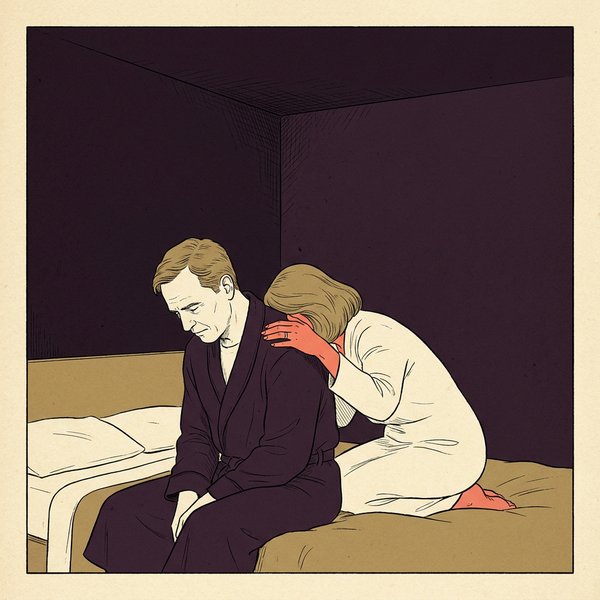 Sociosexuality.org · Audio Erections, Desire and Ageing Bodies
Part 1 · 20 min What is going on
Part 2 · 26 min Desire, the couple and help
Erections, desire and getting older: what's going on, and what helps
+ VAT where applicable
Maybe it happened once.
The night had been going well and you wanted your partner, you were fully there with them, but your body did not follow.
Maybe you laughed it off, or apologized, or turned over without a word. Then the next time came and you were already anxious about it before you had even started.
Or maybe you are the partner. You have noticed. You have tried to be kind about it. But part of you wonders, whether it is about you. Whether you are still wanted. Whether you should say something or never mention it again.
Maybe it has been a while since it last happened and you are still bracing for the next time, or maybe it happens most times now and the two of you have stopped trying, and either way it is sitting there between you.
This is one of those worries a couple keeps very private, sometimes even from each other.
It gets at confidence and at closeness, and after a while the bedroom can turn into a room you both walk around carefully without saying why.
And what you find when you go looking doesn't help much. The ads want to sell you a quick answer, the jokes make it a punchline, and the forums are mostly strangers guessing at each other's problems, while talking to a doctor about it still feels hard to even begin.
Meanwhile the partner is left guessing too. Reading a turned back as rejection. Reading a calm night as a verdict. Two people, side by side, each sure the problem is their own fault.
So you end up carrying questions around that you might never ask anyone out loud.
Is this normal at my age? Is it my body or my head? If it is happening, does it mean I do not want my partner any more? Does it mean they do not want me? Is there anything we can do?
People have looked into exactly this. In 1994 Feldman and colleagues published the Massachusetts Male Aging Study, which followed erection problems in men as they aged, and other researchers have studied couples who live with erectile difficulty together.
But that research hardly ever makes it to the two of you. It stays in medical journals, written for other researchers, and meanwhile you lie awake at night guessing on your own, and worrying, about what it means.
So we laid it out clearly, for men with erection changes and for their partners.
What changes after you listen
Once you've listened, you two won't be carrying this secret on your own anymore.
You'll find out how common erection problems get as men age, and it comes from a large study set up to answer exactly that, which on its own can take a good deal of the shame away.
You'll learn what the research says causes it, both in the body and in the mind. So next time it happens, you'll have a calmer way to explain it than thinking something is wrong with you.
You will see why desire often stays even when erections change. Wanting your partner is one thing and what your body does is another, and when you both understand that, a lot of the hurt between you can ease.
You'll see how couples adjust, and it isn't by acting like nothing changed. They find their own ways to stay close and to keep a sex life that fits the bodies they have now.
You'll also learn what kinds of help are out there, from a doctor to a sex therapist, and why people end up going to one or the other. This title doesn't take the place of either of them, but it can help you walk in knowing what to say and a bit less afraid.
And you get to look at each other more fairly. He isn't broken, and his partner isn't unwanted. You're two people whose bodies are changing the way bodies do, and you still get to work out together what being close looks like now.
We don't promise miracles, and we don't blame either of you. What you get is the research, explained warmly, plus some things you can try.
Here is some of what you will find out
- How common erection trouble gets as men age, from a large study that followed men over the years (Part 1)
- Why the Massachusetts Male Aging Study was started, what it was looking for, and why we still lean on it (Part 1)
- The body causes research finds behind erection problems, explained in plain words (Part 1)
- The mind causes the research points to, and why they deserve the same attention you'd give the body (Part 1)
- Body or head? It's the question most men ask first, and the answer is usually more useful than they expect (Part 1)
- Why it's worth knowing what kind of cause you might be dealing with before you talk to anyone about it (Part 1)
- How to talk to your partner about what's going on, without turning it into a joke or saying sorry for it (Part 1)
- Why this says nothing final about who you are as a man, or as a partner to someone (Part 1)
- Desire usually stays put even when erections change, and here is what that means for the two of you (Part 2)
- What a partner can stop worrying about once they understand where desire sits (Part 2)
- How couples adjust when one partner's body changes, and what research on couples looks at (Part 2)
- Talking about it gently, so neither of you ends up carrying the blame (Part 2)
- How you can stay close, and keep a sex life that suits the bodies you both have now (Part 2)
- The kinds of help that exist for erection problems, and when it makes sense to see a doctor or a sex therapist (Part 2)
- What a sex therapist is for, so the idea is less mysterious (Part 2)
- How to raise this with your doctor without the embarrassment getting in the way (Part 2)
- Something to say to the partner who feels unwanted, and something for the man who feels he let them down (Part 2)
- Going to a session together can feel a lot different from showing up on your own (Part 2)
+ VAT where applicable
- 46 minutes of audio in 2 parts
- A printable PDF workbook
- Plays in your browser on any device, signed in
30-day money-back guarantee. If it is not for you, write to support within 30 days and you get every cent back.
What each part gives you
Part 1 · 20 minutes
What is going on
This part takes the questions you may be asking yourself but not saying out loud, like whether this is normal, and whether it comes from your body or your head. We walk you through how common erection problems become with age, using the Massachusetts Male Aging Study that Feldman and colleagues published in 1994. Then we go through the body causes and the mind causes that research has found, and what each kind tends to mean for you. Once you know that much, an erection problem no longer has to sit there as a private shame. It becomes something with known causes, something you can bring up calmly with a partner, and with a doctor too if you decide to.
You walk away with
- How common erection problems are with age
- The body and mind causes research finds
- Why the body and the mind both matter here
- Calm words to explain what is happening
Part 2 · 26 minutes
Desire, the couple and help
Here the focus moves from one body to the two of you. Desire often sticks around even when erections change, and that matters a lot to both partners, so you'll hear why. Drawing on research on couples and erectile difficulty, you'll hear how couples adjust and what helps two people stay close and keep a sex life that fits the bodies they have now. Then we go through the kinds of help that exist and when people see a doctor or a sex therapist, so the next step feels less mysterious. If you're the partner, this part can help you stop wondering whether it's about you, and if you're the man, it can help you stop carrying it alone.
You walk away with
- Desire often stays when erections change
- How couples adjust and stay close
- The kinds of help that exist, and when people tend to use them
- A shared way to talk about it without blame
This is for you if…
- your erections have changed lately and you would like to know what might be behind it
- your partner is going through changes with erections and you'd like to know how to support them without adding pressure or making things harder
- you're afraid this means the desire has gone out of it, for you or for them
- you want to see what kinds of help are out there before you choose what to do next
- you'd sooner have the research explained in clear words than read ads, jokes or guesses from forums
- you want calm words to talk about this as a couple
This is not for you if…
- You want a diagnosis or a treatment plan, and that part belongs with your doctor, not with us.
- You want a sex therapist in your ear. This walks you through what the research says, but it doesn't stand in for one.
- you want a pill, a product or a fast fix; we can't offer you one
- you're looking for someone to say whose fault this is, you or your partner
- you want graphic content or erotica; what you get here is research, told warmly and with respect
Why you can trust it
This title rests on published research, mainly the Massachusetts Male Aging Study, which Feldman and colleagues published in 1994 and which followed how erection problems showed up in men as they got older.
Alongside it sits research on couples and erectile difficulty, the studies that look at what happens between two people, not only in one body.
We go through what the research covers, and we tell you where it stops. We don't diagnose anything, we don't sell you a treatment, and we are no stand-in for a doctor or a sex therapist. What we can do is help you understand it, so the next step you take is your own and you take it seeing clearly.
Built on the research: the Massachusetts Male Aging Study (Feldman and colleagues, 1994); research on couples and erectile difficulty.
The workbook that comes with it
The workbook is somewhere each of you can think on your own, privately. Every part opens with the key ideas on a single page, and after that come questions about your own experience, like what has changed for you, what worries you and what you still want.
There are pages where the two of you fill things in side by side. And there's one more page, for when you decide to see a doctor or a sex therapist, that helps you get ready for that talk. We've found that once you've written it down, saying it out loud gets a lot easier.
+ VAT where applicable
- 46 minutes of audio in 2 parts
- A printable PDF workbook
- Plays in your browser on any device, signed in
30-day money-back guarantee. If it is not for you, write to support within 30 days and you get every cent back.
Questions you may have
Is this only for men?
No. It's for men whose erections have changed, and for the partners who live with that too. Part 1 goes through what's happening in the body and in the mind, and Part 2 gets into desire, the couple, and where to find help. You can listen on your own or together.
Will this tell me which treatment I should use?
No. Which treatment to try is something you and your doctor decide together. What this title does is walk you through the research and the different kinds of help out there, so you walk into that conversation with clearer questions to ask.
I'm fairly young. Does this only apply to older men?
Part 1 covers how common erection problems get as men age, but the body and mind causes, and all of Part 2 on desire and the couple, apply whenever the change shows up for you.
My partner won't talk about any of this. Is it fine to listen alone?
Yes, you can listen on your own. You'll come away understanding what's going on and why desire often stays put, and you'll have some gentle words ready for whenever a conversation does happen.
Could listening to this make me feel worse about myself?
No, it's meant to do the reverse. We treat erection changes as something researchers have studied and can explain, with causes that have names, and not as some failure on your part. You should come away with less shame.
Does this take the place of seeing a sex therapist?
No, it isn't. What it does is explain what sex therapists and doctors are for and when people tend to see them, so you can decide whether to go and what to say once you're there.
We're a same-sex couple. Does any of this still apply to us?
Part 1 covers what causes erection problems, and that research is about men's bodies, so it applies to any man whoever his partner is. The couples research in Part 2 we describe as it is, and we tell you who it covers.
Does it tell you erection problems mean your sex life is over?
No. In Part 2 we look at why desire tends to stick around even when erections change, and at how couples adjust to that, so you and your partner can work out a sex life that fits the bodies you have now, whatever shape that takes for you.
How do I listen?
Once you've got your title, it sits in your library right here on the site, and you can play each part in the page itself on your phone, your tablet or your computer, so there's no app you need to install first.
Can I listen in the car, or when I'm out on a walk?
Yes. Open your library on your phone while signed in, and every part plays anywhere you've got a signal. It remembers where you stopped, so you can pause in the car and carry on later.
Do I need a password?
No. You sign in with the same email address you used when you bought, and we send a one-time link to that address so you can get in. You don't have a password to keep track of.
What is the workbook?
There's a PDF you can print to go along with the audio. It sets out the key ideas from each part, gives you questions to answer about your own life, and leaves space to write, either on paper or right on screen if you'd rather not print it.
Is this therapy, or medical advice?
No. It is education: the published research, explained clearly so you can use it. If you are in crisis or need care, a licensed professional is the right next step, and this can sit alongside that work.
What if it is not for me?
Then you get your money back. For 30 days after you buy a title, write to support and we refund you in full. You do not have to give a reason. A membership started at the 6-month price is covered too: the trial charge and the payment for its first months, for 30 days from the trial charge. The plain trial and the monthly membership are not covered by this guarantee.
My card was declined. What now?
Then the money was not taken from your card. Try again in a few minutes, or try another card. If it is declined again, your bank can tell you why: some banks turn down a first payment to a new shop until you say yes in their app. If it still does not go through, write to support and we will help.
So this is where things stand now.
Something has shifted in the bedroom, slowly or all at once, and worry came along with it. Worry about your body, about desire, about whether you're still wanted.
You could go on tiptoeing around it. You could go on with the joke, or the sorry, or the silence.
Or you could take a couple of evenings and find out what the research actually says. How common this gets with age, and what causes it, both in the body and in the mind. Why desire so often stays even when other things change. How couples adjust, and what kinds of help are out there.
You don't have to have made up your mind about anything first. Whether to see a doctor or a sex therapist, or whether to raise it at all, can wait. All it takes to begin is wanting to understand what's going on.
By the end you should have plainer words for it, a bit less shame, and a few small things the two of you could try.
And if you two listen together, you've both heard the same thing, said in the same calm language. That alone can make the hardest conversation in your relationship one you're actually able to have.
Erections, Desire and Ageing Bodies was made for exactly this, and we hope you'll give it a listen.
+ VAT where applicable
- 46 minutes of audio in 2 parts
- A printable PDF workbook
- Plays in your browser on any device, signed in
30-day money-back guarantee. If it is not for you, write to support within 30 days and you get every cent back.
P.S. A change in erections is not the end of desire, and it is not a verdict on anyone. This title shows you how common erection problems are with age, what causes them, why desire often stays, how couples adjust and what help exists, so the two of you can face it together with clear words.