← The library Opening the sample... Get the first 10 minutes of Part 1 free, out of 97 minutes in the full title. It is the same recording. Enter your email and it starts playing right here. That link has expired, or we have already sent you a newer one. Enter your email and we will send you a fresh link. Check your inbox. We sent a link to . Tap it and the sample opens. Nothing there yet? Look in your spam or promotions folder, or send it again. You are in now. Refresh the page and start listening. 0:00 of --:-- This title is in your library. Every chapter is open: tap one and it plays there. Retroactive Jealousy: When a Partner's Past Hurts If you've ever lain awake going over some story about a person your partner loved before you met, and then hated yourself a little for doing it, we wrote this for you. We've also tried to be honest about what the science knows here and what it doesn't know yet. 30-day money-back guarantee. If it is not for you, write to support within 30 days and you get every cent back.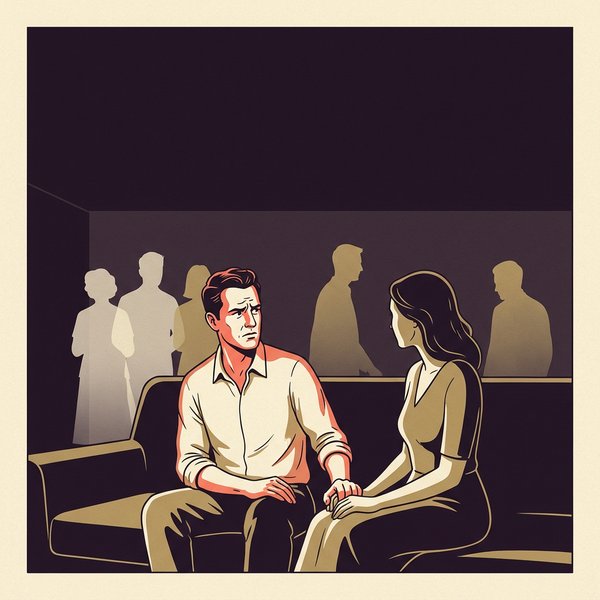 Sociosexuality.org · Audio Retroactive Jealousy
Part 1 · 47 min What it is
Part 2 · 50 min What research suggests
Retroactive jealousy: when their past won't leave your head
+ VAT where applicable
It's one in the morning and your partner is asleep beside you.
You love them and you trust them, and nothing is wrong between you two.
But your mind has gone somewhere else, to a room you have never seen, years before the two of you met, with a person you don't know. You are replaying something your partner mentioned once in passing and filling in details nobody gave you, and asking yourself the same questions you asked last night.
Who were they, and what was it like? Was it better than what you have now? And why does it matter to you this much?
That last question hurts the most, because part of you already knows it shouldn't matter. The past is the past, and your partner is here with you now. You'd never want them to have had no life at all before you came along.
Still, knowing it doesn't make the thoughts stop.
So you ask one more question. Then another one. You dig out an old photo and look at it, and you tell yourself tonight is the last time you'll do this, and then the next night the film starts up again.
Or maybe you're the partner in this. You've answered the same question three times now, and you honestly don't know anymore what the right answer is supposed to be, and somewhere along the way you started to dread the word 'before'.
This has a name, by the way. It's called retroactive jealousy, and it means being tormented by a partner's past relationships.
Anyone selling you a quick fix will skip this part, so we won't: there is very little research on retroactive jealousy itself.
We could have hidden that. We would rather say it clearly, right at the top.
But there is research right next door that comes very close: studies on obsessive thoughts that fix on a relationship, and on rumination, which is what your mind does when it keeps going back over the same ground again and again.
That nearby research is what this title is built on, and we point it out each time we lean on it, so you can tell which parts are proven about retroactive jealousy and which we've borrowed from its close neighbours.
What changes after you listen
Once you have listened, you will understand what is going on in your own head at 1 a.m.
You'll learn what makes retroactive jealousy different from the ordinary kind. It's about people and moments that are already over, and you'll see exactly where it splits off from everyday jealousy.
You'll see how retroactive jealousy ties in with obsessive thinking, and why the same questions keep circling back to you.
You'll hear what the research on rumination and obsessive thoughts has to say about easing thoughts like these. We won't tell you they vanish, because that isn't honest, but you get grounded ideas from the research that sits closest to what you're going through.
If you're the partner of someone who feels this, you'll get a clearer picture of what is going on for the person you love, and you can treat it as something the two of you work to understand together, not as a charge being brought against your past.
And you will be able to talk about it, with your partner or with yourself, without shame.
You'll also be able to tell how much of what you hear is about retroactive jealousy itself and how much we've borrowed from the research on rumination and obsessive thoughts, because we tell you which is which. We think you should get that kind of honesty too.
No judgement of you. No judgement of your partner's past. Just the research, including its limits, laid out so you can use it.
Here is some of what you will find out
- Where retroactive jealousy parts ways with ordinary jealousy, and what that difference means for the next thing you do (Part 1)
- Why your partner's past can still hurt you, even when you know for certain it's over and done with (Part 1)
- How retroactive jealousy relates to obsessive thinking, explained clearly and without labels you did not ask for (Part 1)
- Why one more answer about their past doesn't settle it, and what the link to obsessive thinking suggests (Part 1)
- What relationship-focused obsessive thoughts are, and why the research on them is the closest map we have right now for what you're going through (Part 1)
- You can love your partner and trust them and still be tormented by their past, and that isn't a contradiction, here is why (Part 1)
- The honest truth about the research: how little there is on retroactive jealousy itself, and why we tell you so (Parts 1 and 2)
- What rumination is, the mind going over the same ground again and again, and what research on it says (Part 2)
- What the research on rumination and obsessive thoughts says about how thoughts like these can ease (Part 2)
- What the research on obsessive thoughts suggests you might try when the same thought comes back again (Part 2)
- Things you could try, taken from the research closest to what you're going through, and we'll be honest about how far that research goes (Part 2)
- If you are the partner: what is going on for the person you love when they come back to your past and ask about it again (Parts 1 and 2)
- If you're the partner: what the research on easing these thoughts suggests about how you might respond (Part 2)
- How to tell if you're thinking about your partner's past or ruminating on it, and why that difference matters so much (Parts 1 and 2)
- Why the research you need sits right next door to your problem, and how to use it well (Parts 1 and 2)
- How to bring up retroactive jealousy with your partner so the conversation stays about the two of you and doesn't become a trial of anyone's history
- Why having these feelings doesn't make you a bad partner, or a controlling person, or a prude.
+ VAT where applicable
- 97 minutes of audio in 2 parts
- A printable PDF workbook
- Plays in your browser on any device, signed in
30-day money-back guarantee. If it is not for you, write to support within 30 days and you get every cent back.
What each part gives you
Part 1 · 47 minutes
What it is
This part gives the experience a name and a shape. You'll learn how retroactive jealousy is different from ordinary jealousy, and why a feeling about a past that's already over needs its own explanation. Then we look at how retroactive jealousy relates to obsessive thinking, the kind of thought that keeps coming back whether you invite it or not. You'll hear what relationship-focused obsessive thoughts are and why that research is the closest guide we've got. We're open with you the whole way through about how little research looks at retroactive jealousy itself. By the end you'll understand the film playing in your head a lot better, and you can stop treating it as proof that something is wrong with your relationship.
You walk away with
- How retroactive jealousy differs from ordinary jealousy
- How it relates to obsessive thinking
- What relationship-focused obsessive thoughts are
- We tell you straight how little direct research there is.
Part 2 · 50 minutes
What research suggests
This part turns from understanding to easing. You will hear what the related research on rumination and obsessive thoughts says about easing thoughts like these. There is more research on rumination, the habit of going over the same ground again and again, and on obsessive thoughts, than on retroactive jealousy itself. We bring that research to your experience carefully, and we tell you each time that we are borrowing it from a close neighbour. You will come away with things to try that come from research, not from guesswork. If you are the partner, you will see how that research can shape the way you respond. No promises that the thoughts vanish. Clear, grounded ideas about how to hold them more lightly.
You walk away with
- What the research on rumination says about easing thoughts that keep coming back
- What research on obsessive thoughts suggests
- Things you can try, and an honest word on how far the evidence goes
- A gentler way your partner can respond when it comes up
This is for you if…
- You keep thinking about your partner's past relationships and can't seem to stop, though you'd like to.
- You know it's in the past, but you still lie awake at night going over it again.
- You're with someone who feels this, and you'd like to understand what's going on for them instead of having to defend yourself.
- you want to know how retroactive jealousy connects to obsessive thinking
- you care about being told straight what the research knows and where it stops knowing
- you'd like things to try that come out of actual research, rather than the folklore that gets passed around on forums
This is not for you if…
- If you're after a method that's sure to stop the thoughts for good, we can't promise you one, and we won't pretend otherwise.
- you want us to tell you your partner's past was wrong, or that what you feel proves something about them; we won't do either
- you want a title that rests on a large body of research about retroactive jealousy itself, and we can't give you that because that body of research does not exist yet
- you need a fast fix for a relationship that is in crisis right now
Why you can trust it
I'll be honest with you about the research on retroactive jealousy itself, because there isn't much of it and what exists is thin, so any title claiming more than that is selling a certainty the studies don't support.
So this title leans on the research that sits closest to it, which is the work on relationship-focused obsessive thoughts and the research on rumination, because those are the two bodies of research that speak most directly to thoughts that keep circling a partner and a relationship and won't let go.
Wherever we lean on that nearby research, we tell you so as we go, so you can always see which ideas come from retroactive jealousy work itself and which ones we borrowed from next door. When the evidence behind something is strong we'll say that, and when it's thin we'll say that as well.
Built on the research: thin. There is little research on retroactive jealousy itself. The title must lean on research about relationship-focused obsessive thoughts and rumination, and say so openly.
The workbook that comes with it
The workbook is where the listening turns into a calmer mind. Each part gets one page with the key ideas on it, and after that come questions about your own life and some space for you to write.
When the thoughts go onto paper rather than round and round at night, you may find you see them a bit differently. The workbook is also something you can show your partner, if they want to understand, in your own time and as much as you choose.
+ VAT where applicable
- 97 minutes of audio in 2 parts
- A printable PDF workbook
- Plays in your browser on any device, signed in
30-day money-back guarantee. If it is not for you, write to support within 30 days and you get every cent back.
Questions you may have
Is retroactive jealousy a recognised condition?
Retroactive jealousy itself hasn't been studied much, and we'd rather tell you that up front than pretend otherwise. You won't get a diagnosis from this title. What you get is an explanation of how the experience connects to obsessive thinking, drawing on the research into relationship-focused obsessive thoughts and rumination, since that's the closest guide anyone has right now.
The research is thin, so why would you trust this?
Because we tell you where we stand. Whenever we borrow from the nearby research on rumination and obsessive thoughts we point it out, so you get the best of what is known along with an honest account of where the gaps are.
Will this make the thoughts stop?
We won't promise that, because no honest source can. What you get is understanding, plus things to try that come from the research on rumination and obsessive thoughts. And understanding what's going on can change how you relate to the thoughts, even on the nights they still show up.
What if I'm the partner? Is this for me as well?
Yes, it is. It can help you understand what's going on for the person you love, and see it as something the two of you work through together instead of a verdict on your past. Part 2 may also change how you respond.
Is this judging my partner's past, or the way I feel about it?
Neither one. Your partner's past is part of who they are, and the feelings you have about it are real and worth understanding, so this title treats both with respect.
Should I say something to my partner about feeling this way?
That part is up to you. What this title does is give you language for what you're feeling and how it ties into obsessive thinking, so if you decide to talk to your partner, the conversation may come a bit easier. And the workbook is something you can hand over whenever you're ready, or not at all.
How is this different from ordinary jealousy?
That's where Part 1 starts. Retroactive jealousy is about a partner's past relationships, ones that are already over, and this title is built around what makes that different from ordinary jealousy and how it ties in with obsessive thinking.
I've been feeling this way for years. Is it too late for this to help me?
No. This title is about understanding what's going on, and what the research on rumination and obsessive thoughts says about easing thoughts like these. That understanding helps whenever you come to it, whether the thoughts started last month or many years ago.
How do I listen?
Once you've got your title, it sits in your library right here on the site, and you can play each part in the page itself on your phone, your tablet or your computer, so there's no app you need to install first.
Can I listen in the car, or when I'm out on a walk?
Yes. Open your library on your phone while signed in, and every part plays anywhere you've got a signal. It remembers where you stopped, so you can pause in the car and carry on later.
Do I need a password?
No. You sign in with the same email address you used when you bought, and we send a one-time link to that address so you can get in. You don't have a password to keep track of.
What is the workbook?
There's a PDF you can print to go along with the audio. It sets out the key ideas from each part, gives you questions to answer about your own life, and leaves space to write, either on paper or right on screen if you'd rather not print it.
Is this therapy, or medical advice?
No. It is education: the published research, explained clearly so you can use it. If you are in crisis or need care, a licensed professional is the right next step, and this can sit alongside that work.
What if it is not for me?
Then you get your money back. For 30 days after you buy a title, write to support and we refund you in full. You do not have to give a reason. A membership started at the 6-month price is covered too: the trial charge and the payment for its first months, for 30 days from the trial charge. The plain trial and the monthly membership are not covered by this guarantee.
My card was declined. What now?
Then the money was not taken from your card. Try again in a few minutes, or try another card. If it is declined again, your bank can tell you why: some banks turn down a first payment to a new shop until you say yes in their app. If it still does not go through, write to support and we will help.
So this is where we've got to.
There is a film that runs in your head. It's about the time before you, people you never met, moments that ended long ago. You know it shouldn't matter, and it keeps playing anyway.
Maybe you have felt ashamed of it. Maybe you kept it to yourself, or you asked one question too many and saw your partner's face drop.
You deserve better than shame, and better than a quick fix that promises what no one can honestly promise.
What we can give you is understanding. What retroactive jealousy is, how it differs from ordinary jealousy, how it relates to obsessive thinking, and what the closest research says about easing it. Told honestly, limits and all.
You don't have to keep replaying the film by yourself at 1 a.m. Two evenings, or two long walks, is enough to hear what researchers have found so far.
You will come out the other side with words for what is happening, a kinder view of yourself, and things to try that come from real research.
That's why we made Retroactive Jealousy: When a Partner's Past Hurts, and we hope you'll give it a listen.
+ VAT where applicable
- 97 minutes of audio in 2 parts
- A printable PDF workbook
- Plays in your browser on any device, signed in
30-day money-back guarantee. If it is not for you, write to support within 30 days and you get every cent back.
P.S. Being tormented by a partner's past doesn't make you a bad partner. In this title we explain how retroactive jealousy relates to obsessive thinking and what the research on rumination says about easing it, and we'll be honest with you that the direct research on it is thin.