← The library Opening the sample... Get the first 9 minutes of Part 1 free, out of 114 minutes in the full title. It is the same recording. Enter your email and it starts playing right here. That link has expired, or we have already sent you a newer one. Enter your email and we will send you a fresh link. Check your inbox. We sent a link to . Tap it and the sample opens. Nothing there yet? Look in your spam or promotions folder, or send it again. You are in now. Refresh the page and start listening. 0:00 of --:-- This title is in your library. Every chapter is open: tap one and it plays there. When One Partner Wants an Open Marriage Maybe one of you has already said it, or you're getting close to saying it. Either way, there are now two people sitting at the same kitchen table wanting different things, and each of you deserves to be heard by the other. 30-day money-back guarantee. If it is not for you, write to support within 30 days and you get every cent back.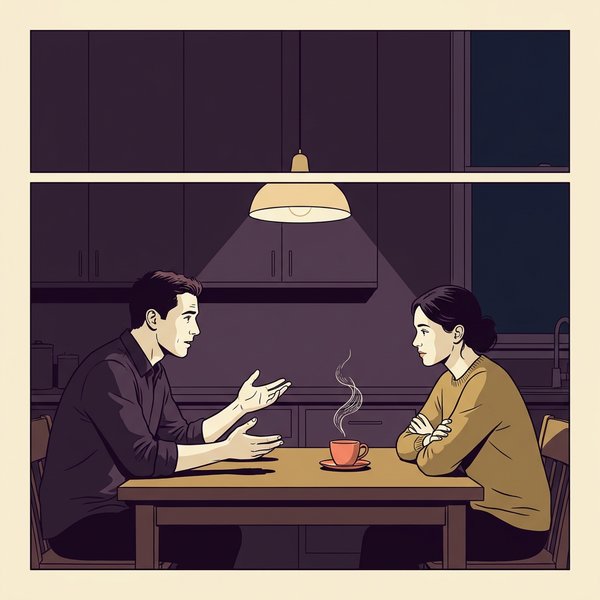 Sociosexuality.org · Audio When One Partner Wants an Open Marriage
Part 1 · 28 min Why the wish comes up
Part 2 · 43 min The partner who did not ask
Part 3 · 43 min What couples who tried it report
When one of you wants an open marriage and the other one doesn't
+ VAT where applicable
It slipped out late one night, after a long evening together.
It was late, there was wine, things were calm, and then one of you said the sentence that shifted everything in the room: "Have you ever thought about opening things up?"
Or maybe you were the one who said it, after months of carrying it around by yourself. You love your partner and you aren't looking for a way out, but the wish kept coming back anyway.
Or maybe you were the one who heard it, and in one second you felt a dozen things together. Fear, hurt, confusion, and a small cold voice asking whether you are not enough.
Ever since, it has been sitting there between the two of you. You talk around it, or it comes up at 1 a.m. and goes in circles until neither of you sleeps.
Here is what makes it so hard.
We don't think either of you is the bad guy here. Asking doesn't make someone a cheat who hasn't got around to it yet, and the partner who said no isn't a prude or a jailer. You want different things from the same bond, and you both have good reasons.
Problem is, almost none of the advice out there is fair to both of you.
One part of the internet says monogamy is out of date, and that the partner who resists just has to get over it. Another part says anyone who asks has already broken the marriage. Friends end up picking a side, and forums do too. The person left out of the story is usually the one who did not ask.
There is a calmer place to stand.
Researchers have looked at couples in exactly your spot, where one of you wants to stay monogamous and the other wants things more open. They've studied consensual non-monogamy, and they've followed what happens to couples who open up, couples who stay closed, and couples who end up going separate ways.
But nobody lays that work out clearly for both of you at the same time, so we're making a title that does.
What changes after you listen
Once you've listened, the wish won't feel like a bomb dropped on the table anymore, more like something the two of you can sit down and look at together.
If you were the one who asked, we want you to come away knowing where the wish may come from, whether that is desire, novelty, or the kind of difference in sociosexuality that can sit inside one couple without anyone being at fault, and with words for it that sound like neither an accusation nor an excuse.
If you are the one who did not ask, this title gives your side the same weight as the other one. Your fear, the sense that something could be lost, your right to say yes or to say no, none of that is treated as a hurdle to get past. It is what the whole question turns on, and we give it the same care.
You will both come to see what consent means in a question like this, and it is not a tired yes given after the tenth talk but a choice two people make freely.
You'll hear what the studies say about couples who want different things here, and you'll hear from couples who went through it, some of whom opened up, some who stayed closed and some who separated. We don't hold up any one of those outcomes as the right one.
You will also leave with a calmer way of talking about it, so there are fewer of those conversations that go in circles at 1 a.m., and more sense of why the person across the table feels the way they do.
We won't make the choice for you, and we won't tell you we can rescue the marriage or bring a partner around. What you get is a clearer picture and the research behind it, so whatever you decide is your own decision.
Here is some of what you will find out
- Why someone might start wanting an open marriage, and why that wish doesn't automatically mean the love between you is gone (Part 1)
- What the research says about wanting desire and novelty after years together, explained in a way that doesn't put the blame on either of you (Part 1)
- Why two people who love each other can land at different spots on the sociosexuality spectrum, and how that gap tends to show up in a couple's day-to-day life (Part 1)
- How to tell a wish about the marriage apart from a wish to leave it, and why that question carries so much weight for the partner who hears it (Part 1)
- Asking for it doesn't make the partner who asked the selfish one, and the partner who said no isn't automatically controlling either, which takes some untangling (Part 1 and Part 2)
- Why "Am I not enough?" is usually a fear talking, and why we think it deserves to be taken seriously rather than argued away (Part 2)
- Why the partner who didn't ask can feel a real loss, even when nothing has happened yet (Part 2)
- What consent means when one of you wants this and the other doesn't, and why a yes that came out of pressure isn't the same as a yes freely given (Part 2)
- What the research says about couples where one partner wants monogamy and the other doesn't (Part 2)
- Why the partner who did not ask often ends up feeling left out of the conversation, and how to put them back in the middle of it (Part 2)
- The one question each of you can ask the other that gets you to understanding, instead of round the same fight again (Part 2)
- What couples who opened their relationship tell us afterwards, reported honestly and with no pitch for open marriage either way (Part 3)
- What couples who stayed closed tell us, and why keeping your marriage closed can be a choice you made on purpose, not a defeat (Part 3)
- What couples who separated tell us in the research, and why that outcome belongs in an honest picture (Part 3)
- Why this research has no single right ending, and what that means for the choice you and your partner are facing (Part 3)
- What the outcome studies on consensual non-monogamy can show you, and where they stop being any help with your own marriage (Part 3)
- A fair way to think this through, one that respects the partner who raised the question and the partner who did not, covering every part of the subject (all parts)
- Why it can help more to understand each other's side than to decide quickly (all parts)
+ VAT where applicable
- 114 minutes of audio in 3 parts
- A printable PDF workbook
- Plays in your browser on any device, signed in
30-day money-back guarantee. If it is not for you, write to support within 30 days and you get every cent back.
What each part gives you
Part 1 · 28 minutes
Why the wish comes up
This part begins with a question the partner who asked may not be able to answer well even for themselves, which is why the wish comes up at all. You will hear what research finds about desire and novelty in long relationships, and about differences in sociosexuality, how two people inside one couple can sit at quite different places on that spectrum and still love each other deeply. Having that explained calmly tends to take a lot of the heat out of the room. For the partner who asked, it offers words for the wish that are not guilt and not excuse either. The partner who did not ask gets to see the wish for what it may be, and that can be easier to face than whatever you feared it meant.
You walk away with
- There's research behind why someone wants to open a marriage, and we walk you through it.
- Why desire and novelty fade in long relationships, without anyone being at fault
- Partners can land at different spots on the sociosexuality spectrum, and that's okay.
- Words for the wish neither of you has to fight about
Part 2 · 43 minutes
The partner who did not ask
This part is for the partner who did not ask, and we think it matters as much as the first part does. The fear and the hurt and the sense of loss that can come with this question get taken seriously here, not hurried past. We spend time on consent, on what it means for both of you to choose freely, and on why a yes you give so the argument will stop is not the same thing as a real yes. After that you hear what studies show about couples with mixed wishes, where one partner wants monogamy and the other wants something more open. The partner who asked will come away understanding better what the question set in motion, and the partner who did not gets put back in the centre of the story, where they belong.
You walk away with
- The partner who didn't ask gets a full and equal side here, too.
- Fear and loss deserve care, not to be argued away
- What consent looks like when the two of you want different things
- What the research shows about couples who want different things
Part 3 · 43 minutes
What couples who tried it report
The last part is about what happens next, once a couple has made a choice. You'll hear what couples report after opening up, after staying closed, and after separating, because all three belong in the honest picture and we don't hold any one of them up as the right ending. You'll also hear what consensual non-monogamy outcome studies can tell you and what they can't, so you know how much weight to put on them when you think about your own marriage. None of this pushes you toward a door. It shows you what's behind each one, as far as the research can see, and the two of you decide from there with your eyes open.
You walk away with
- What couples who opened up report
- Why staying closed can be a real choice and not a defeat
- Separation as part of an honest picture
- What the outcome research can tell you about your own marriage, and what it can't
This is for you if…
- You asked your partner about opening the marriage, and now you want to understand where that wish comes from in you.
- your partner has raised opening the marriage, and you want your side of it heard as fully as theirs is
- You keep having the same conversation with each other, and every time it ends up right back where it started.
- you want the research itself, not advice from a side that has already made up its mind for you
- You want the words for fear, desire and consent, ones you can say to the person you love without hurting them.
- you want to know how couples who want different things fare, whichever way they go
This is not for you if…
- you would like someone to tell you whether opening your marriage is right or wrong for the two of you
- You're hoping for a way to get a reluctant partner to say yes to opening things up.
- you need a fast fix for a marriage that's already in crisis
- you want a step-by-step guide for setting up an open relationship, but this title is about deciding whether to do it at all
- You want graphic content; this is research told with warmth, and it isn't erotica.
Why you can trust it
This title draws on published research about couples where one partner is monogamous and the other is not, and on studies of consensual non-monogamy and how things turn out for the people who live it.
It also leans on research about desire, novelty and sociosexuality, meaning how open someone is to sex without commitment, and how far apart two people who share a life can be on that.
We don't pick a side here. The partner who wants to open things up gets the same time and the same care as the partner who doesn't. When the research is solid we tell you that, and when it's thin or limited we tell you that as well.
Built on the research: research on couples with one monogamous and one non-monogamous partner; consensual non-monogamy outcome studies.
The workbook that comes with it
The workbook is built for the two of you. Each part puts the key ideas on one page, then gives you questions to answer alone, and after that questions you work through together, side by side.
The partner who asked gets a way to put the wish into words, what it is and what it isn't, and the partner who didn't ask gets room to name what they're afraid of and what they need. When both sets of honest answers sit on the same page, the talk you have afterward can be a calmer one.
+ VAT where applicable
- 114 minutes of audio in 3 parts
- A printable PDF workbook
- Plays in your browser on any device, signed in
30-day money-back guarantee. If it is not for you, write to support within 30 days and you get every cent back.
Questions you may have
Is this title trying to talk me into opening my marriage?
No. We made it for both of you. The partner who doesn't want to open up gets the same care and the same amount of time as the one who does, and we won't push you toward any particular choice.
What if I'm the one who said no? Am I just going to get told to get over it?
No. The whole second part is about your side: fear, loss and consent. Your no is treated as a real answer with real reasons, not a problem to be solved.
I am the one who asked for this. Will it make me feel like a bad person?
No. The first part looks at where the wish might be coming from, things like desire, novelty, and differences in sociosexuality. We treat it as something to understand, and you don't need to be ashamed of it.
Can this save our marriage?
We can't promise that, and honestly we wouldn't want to. What it can do is help the two of you understand what's going on and talk about it more calmly, and what you do with that is up to you.
Should we listen together or separately?
Either way is fine. Some couples may want to listen on their own first and talk after. The workbook has questions you each answer alone, and questions you answer side by side.
Will it show us how to set up an open marriage?
Not in detail. This title is about the decision and the two people making it. If you want to look at agreements and rules, that is the subject of a separate title on rules and agreements in open relationships.
Is the research about people like us, or only about people already in open relationships?
Both. Some of it is research on couples where one partner is monogamous and the other isn't, and that's the exact situation this title covers. The rest is research on how consensual non-monogamy turns out for the people in it.
How do I listen?
Once you've got your title, it sits in your library right here on the site, and you can play each part in the page itself on your phone, your tablet or your computer, so there's no app you need to install first.
Can I listen in the car, or when I'm out on a walk?
Yes. Open your library on your phone while signed in, and every part plays anywhere you've got a signal. It remembers where you stopped, so you can pause in the car and carry on later.
Do I need a password?
No. You sign in with the same email address you used when you bought, and we send a one-time link to that address so you can get in. You don't have a password to keep track of.
What is the workbook?
There's a PDF you can print to go along with the audio. It sets out the key ideas from each part, gives you questions to answer about your own life, and leaves space to write, either on paper or right on screen if you'd rather not print it.
Is this therapy, or medical advice?
No. It is education: the published research, explained clearly so you can use it. If you are in crisis or need care, a licensed professional is the right next step, and this can sit alongside that work.
What if it is not for me?
Then you get your money back. For 30 days after you buy a title, write to support and we refund you in full. You do not have to give a reason. A membership started at the 6-month price is covered too: the trial charge and the payment for its first months, for 30 days from the trial charge. The plain trial and the monthly membership are not covered by this guarantee.
My card was declined. What now?
Then the money was not taken from your card. Try again in a few minutes, or try another card. If it is declined again, your bank can tell you why: some banks turn down a first payment to a new shop until you say yes in their app. If it still does not go through, write to support and we will help.
So here is where things stand.
One of you wants something the other might not. That is a hard spot for a couple to be in, and we have seen enough to know there is no shame in being stuck in it.
You could keep going around and around this at 1 a.m., or hand the question to friends and forums and let them pick a side for you. Or you could spend a few evenings with what the research says about couples who stood right where you're standing now.
We won't tell you what to choose. We'll give you what you need to choose well, whether that's together or apart.
Maybe you were the one who brought this up, and listening will help you see more clearly what you were asking for. Or the question came to you, and here your side gets its full weight, perhaps for the first time.
Whichever way you go, you will leave with clearer words for what you want, a fairer picture of the person across from you, and somewhat more calm than you started with.
We made this title for exactly that, and we hope you will listen to it, ideally the two of you together.
+ VAT where applicable
- 114 minutes of audio in 3 parts
- A printable PDF workbook
- Plays in your browser on any device, signed in
30-day money-back guarantee. If it is not for you, write to support within 30 days and you get every cent back.
P.S. There are two of you here, and each of you has reasons that are real. We wrote this title so the partner who asked and the partner who did not get the same care from us, along with the research you need to reach a choice you both own.