← The library Opening the sample... Get the first 9 minutes of Part 1 free, out of 85 minutes in the full title. It is the same recording. Enter your email and it starts playing right here. That link has expired, or we have already sent you a newer one. Enter your email and we will send you a fresh link. Check your inbox. We sent a link to . Tap it and the sample opens. Nothing there yet? Look in your spam or promotions folder, or send it again. You are in now. Refresh the page and start listening. 0:00 of --:-- This title is in your library. Every chapter is open: tap one and it plays there. Casual Sex and Wellbeing: Who Benefits and Who Doesn't You woke up next to someone new, or after they left, and now you're wondering if that was good for you or if it's going to cost you something later. We went and looked at what the research says about that. 30-day money-back guarantee. If it is not for you, write to support within 30 days and you get every cent back.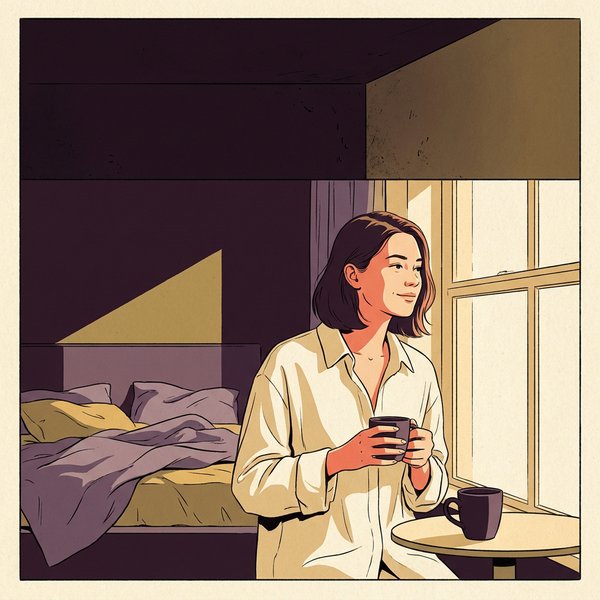 Sociosexuality.org · Audio Casual Sex and Wellbeing
Part 1 · 43 min Why people have casual sex
Part 2 · 42 min Who feels good afterwards
Is casual sex good or bad for you? The research says it depends on who you are
+ VAT where applicable
Morning after. The flat is silent again.
The other person left an hour ago. The night was good. You think it was good. You are lying there, coffee going cold, trying to work out how you feel about it.
Light, a bit pleased with yourself, a bit empty, maybe all three in turns.
And then the voices start.
One friend tells you casual sex is freedom, and that anyone who feels bad about it was taught to feel that way. Another friend says it hollows you out slowly, whether you notice or not. Then a headline claims it is ruining a whole generation, and some podcast says it is the most natural thing in the world.
They can't all be right, and not one of them is talking about you.
That's the trouble with all of it, as we see it. Every one of those voices talks about everybody at the same time, like there's one answer that fits anyone who has ever gone home with someone new.
And then there's usually a second thought, sneaking in right behind the first one. If I feel fine about it, is something wrong with me? And if I feel low, did I screw up?
So the unspoken question never gets a straight answer.
Is it good for me, or is it bad for me?
The research has an answer on this, and it's more useful than what either camp is telling you. It depends on the person.
Not in a vague, shrug-your-shoulders way. In a way researchers have measured. Vrangalova and Ong, in 2014, studied how sociosexuality, how open a person is to sex without commitment, shapes the effect of casual sex on wellbeing. Vrangalova took the work further in 2015.
If you took our sociosexuality quiz before landing here, you're already holding one piece of the puzzle.
This title shows you how to put that piece to use.
What changes after you listen
Once you've listened, you can look at your own sex life and decide what you think of it yourself, without taking on somebody else's verdict.
You'll see why people have casual sex, the motives the studies turn up, and how those motives shift depending on where someone sits on the sociosexuality spectrum. Somewhere in there you'll probably spot your own reasons and get a clearer look at them.
You'll know what the research shows about when casual sex lifts wellbeing and when it pulls it down. Not as a rule that fits everybody, but as a pattern you can hold up against your own life and check for yourself.
You will quit asking whether casual sex is good or bad, since there's no single answer to that one, and start asking something more useful instead: is it good or bad for me, and under what conditions?
If you come away from it feeling great, you'll understand why, and you can quit wondering whether you're supposed to feel worse than you do. And if you sometimes feel a bit low afterwards, you'll have words for that too, plus some things to think about, and none of it comes with shame attached.
You will also be kinder to the people around you. A friend who loves casual sex and a friend who regrets it are not one of them right and one of them wrong. They may simply be different people, and the research gives you a way to see that.
Whichever way it goes for you, the choices stay yours, and you get to make them with the evidence in hand rather than with someone else's fears or someone else's bravado.
No preaching and no pep talk here, we just lay the research out so you can use it.
Here is some of what you will find out
- Why people have casual sex at all: the motives studies find when researchers actually ask (Part 1)
- How people who are more open to sex without commitment tend to give different reasons than people who are less open to it (Part 1)
- Two people can go home together for completely different reasons, and here's what researchers find when they ask each of them why (Part 1)
- What your own result on the sociosexuality quiz has to do with the reasons you might say yes to someone new (Part 1)
- What the research means by sociosexuality, in plain words, and why it is the thread running through this whole title (Part 1)
- Why there's no one answer to "is casual sex bad for you," and the better question to ask instead (Part 1)
- Who comes out of it feeling good? What the research shows about the times casual sex lifts wellbeing (Part 2)
- And who comes away feeling worse? What the studies show about when casual sex drags wellbeing down (Part 2)
- What Vrangalova and Ong found in 2014 when they looked at whether a person's sociosexuality changes how casual sex affects their wellbeing (Part 2)
- What Vrangalova's 2015 work adds to the picture, and how it makes it sharper (Part 2)
- Why one night can do your wellbeing good and do someone else's harm, and how you can work out which of those you are (Part 2)
- What to make of it when you feel fine afterwards and the people around you seem to expect that you shouldn't (Part 2)
- What it means if you feel low afterwards while everyone around you is telling you that you shouldn't, and what to do with that feeling (Part 2)
- How to look back at your own past experiences with the research in mind, without deciding after the fact that they were all mistakes (Part 2)
- Why 'it depends on the person' is not a cop-out but a finding, and what it depends on
- The freedom camp and the warning camp each have part of the story, and neither has all of it. Here is what the evidence gives you instead.
- The two camps you hear from about casual sex, and the part both of them skip, which is you
- Your friend's casual sex going fine, or going badly, may not tell you much about how it would go for you (Part 2)
- Workbook questions that help you take an honest look at why you do it and how you feel the morning after.
- A way to decide, without the shame, what you want your sex life to look like next, based on what the evidence says about people like you
+ VAT where applicable
- 85 minutes of audio in 2 parts
- A printable PDF workbook
- Plays in your browser on any device, signed in
30-day money-back guarantee. If it is not for you, write to support within 30 days and you get every cent back.
What each part gives you
Part 1 · 43 minutes
Why people have casual sex
This part starts where the research starts: why do people have casual sex in the first place? You will hear the motives studies find when they ask, and you will learn how those motives differ depending on a person's sociosexuality, how open they are to sex without commitment. This matters more than it sounds. Two people can share the same night for completely different reasons. You will see your own motives more clearly, perhaps for the first time, and you will understand why the question of whether casual sex is good or bad cannot be answered for everyone at once. By the end, you will have the foundation you need to make sense of how it affects you.
You walk away with
- The motives studies find for casual sex
- How motives differ across the sociosexuality spectrum
- A clearer view of your own reasons
- Why there is no single answer that fits everyone
Part 2 · 42 minutes
Who feels good afterwards
This is the part most of you come for, the question of who feels good afterwards and who does not. We go through what the research shows about when casual sex lifts wellbeing and when it lowers it, and two pieces of work sit at the centre: Vrangalova and Ong's 2014 study and Vrangalova's 2015 follow-up. You will hear how sociosexuality shapes the effect, and you can hold those findings up against your own experience as you listen. Maybe you felt great after a night and wondered whether you were supposed to. Maybe you felt low and could not say why. Either way, we want you to come away with words for it, and with enough understanding to make choices about casual sex that fit you rather than someone else's rule.
You walk away with
- When casual sex lifts your wellbeing and when it brings it down
- How sociosexuality shapes the effect
- A fair way to look back at what you've already lived through
- Choices that fit you, not a general rule
This is for you if…
- You have casual sex, or you're thinking about it, and you want to know what it does to you
- You're tired of hearing that it's either liberation or ruin, and you'd like something closer to the truth.
- you took the sociosexuality quiz and want to know what your score might mean for how you feel
- Sometimes casual sex leaves you feeling great and sometimes it doesn't, and you'd like to know what makes the difference.
- you like real research, clearly explained, more than opinions
- You'd like to make your own choices based on evidence rather than on fear.
This is not for you if…
- you're hoping someone will tell you casual sex is wrong
- you want someone to tell you casual sex is always fine for everyone
- You want tips on how to find casual partners.
- You want graphic content, but this is research, told clearly and warmly, and it isn't erotica.
- you are going through a crisis right now, and what you need is care, not more information
Why you can trust it
This title rests on published research that asks the question the right way round, which is not whether casual sex is good or bad for people in general but for whom it is good or bad. The core of it is Vrangalova and Ong's 2014 study on how sociosexuality changes the effect casual sex has on wellbeing, along with Vrangalova's later work in 2015.
What ties it all together is sociosexuality, meaning how open a person is to sex without commitment. That's the same thing the quiz on our site measures, so this title can talk to you as one person and not to everybody at once.
We do not take sides. Casual sex is not treated as a problem to be solved or a prize to be won. Where the research is clear, we say so. Where it has limits, we say that too, so you know exactly how far each finding goes.
Built on the research: Vrangalova and Ong (2014) on how sociosexuality shapes the effect of casual sex on wellbeing; Vrangalova (2015).
The workbook that comes with it
Think of the workbook as a mirror held up to the research. Every part gets one page with the key ideas on it, and then come the questions about your own life, like why you said yes in the past and how you tended to feel afterwards, and how all of that fits with where you sit on the spectrum.
At the end there's room to write down what you want next, in your own words. It isn't a rule you have to follow, just a clearer picture of where you stand that you can come back to later.
+ VAT where applicable
- 85 minutes of audio in 2 parts
- A printable PDF workbook
- Plays in your browser on any device, signed in
30-day money-back guarantee. If it is not for you, write to support within 30 days and you get every cent back.
Questions you may have
Will this tell me if casual sex is good or bad for me?
No single answer to that one, and it tells you why. What the research finds is that it depends on the person. You'll learn what studies show about when casual sex lifts wellbeing and when it lowers it, and how sociosexuality plays into that.
Will this make me feel guilty about it?
No, it won't. We treat casual sex as a normal part of adult life, something some people choose and some people don't. The title is there to help you understand how it affects you, and it isn't going to judge you for it either way.
Is it going to push me toward casual sex, then?
No. It won't push you to have more casual sex, and it won't talk you out of it either. What we do is lay out the evidence on who tends to benefit and who doesn't, and then the decision is yours.
How does my quiz score fit into all this?
Quite a lot, it turns out. What the quiz measures is your sociosexuality, which is how open you are to sex without commitment, and the research this title draws on looks at how that openness changes the way casual sex affects wellbeing, so your score gives you a useful place to start.
I'm in a relationship now. Is there any point to this?
Yes. Maybe you want to make sense of things that happened before, or maybe you and your partner have talked about opening things up. Either way the research on motives and wellbeing gives you a fair way to look back and a clearer way to think about what comes next.
I've been feeling low after casual sex. Will this help?
It can help you make sense of what the research says about when casual sex leaves people feeling low, and it gives you some words and some things to think about. If the low feeling is heavy, or it hangs on and won't lift, please talk to a professional too; this title is meant to sit alongside that, not take its place.
I'm not that open to casual sex myself. Is this still for me?
Yes, it is. The research covers people all along the sociosexuality spectrum, not only the ones who are very open to it. And if you're still working out whether casual sex fits you at all, seeing how the motives and effects shift from one end of the spectrum to the other is the part that helps you decide.
Is it explicit?
No. It is research about motives and wellbeing, told clearly and warmly. It is not erotica and it is not graphic.
How do I listen?
Once you've got your title, it sits in your library right here on the site, and you can play each part in the page itself on your phone, your tablet or your computer, so there's no app you need to install first.
Can I listen in the car, or when I'm out on a walk?
Yes. Open your library on your phone while signed in, and every part plays anywhere you've got a signal. It remembers where you stopped, so you can pause in the car and carry on later.
Do I need a password?
No. You sign in with the same email address you used when you bought, and we send a one-time link to that address so you can get in. You don't have a password to keep track of.
What is the workbook?
There's a PDF you can print to go along with the audio. It sets out the key ideas from each part, gives you questions to answer about your own life, and leaves space to write, either on paper or right on screen if you'd rather not print it.
Is this therapy, or medical advice?
No. It is education: the published research, explained clearly so you can use it. If you are in crisis or need care, a licensed professional is the right next step, and this can sit alongside that work.
What if it is not for me?
Then you get your money back. For 30 days after you buy a title, write to support and we refund you in full. You do not have to give a reason. A membership started at the 6-month price is covered too: the trial charge and the payment for its first months, for 30 days from the trial charge. The plain trial and the monthly membership are not covered by this guarantee.
My card was declined. What now?
Then the money was not taken from your card. Try again in a few minutes, or try another card. If it is declined again, your bank can tell you why: some banks turn down a first payment to a new shop until you say yes in their app. If it still does not go through, write to support and we will help.
So this is roughly where all of that leaves us.
You've probably heard every verdict on casual sex by now, freedom or ruin, natural or dangerous, and none of them was about you.
The research gives a more honest answer, which is that it depends on the person, and it has begun to show what exactly it depends on, with sociosexuality sitting right in the middle of it.
Or you could keep lying there on Sunday mornings trying to figure out which voice to believe. We'd suggest something else, which is giving it two evenings, or a couple of long walks, and finding out what's actually known.
We look at why people have casual sex, how those reasons shift along the spectrum, and who ends up feeling good afterwards and who doesn't.
By the end you should see yourself more clearly, you will probably have words for feelings you have had for a long time, and you can make your own choices with more confidence, whatever those choices turn out to be.
That's the job this title does. Give it a listen, we think you'll be glad you did.
+ VAT where applicable
- 85 minutes of audio in 2 parts
- A printable PDF workbook
- Plays in your browser on any device, signed in
30-day money-back guarantee. If it is not for you, write to support within 30 days and you get every cent back.
P.S. Is casual sex good or bad for you? There isn't one moral answer to that. The research says it depends on the person, and this title is here to help you work out what it depends on in your case.