← The library Opening the sample... Get the first 8 minutes of Part 1 free, out of 136 minutes in the full title. It is the same recording. Enter your email and it starts playing right here. That link has expired, or we have already sent you a newer one. Enter your email and we will send you a fresh link. Check your inbox. We sent a link to . Tap it and the sample opens. Nothing there yet? Look in your spam or promotions folder, or send it again. You are in now. Refresh the page and start listening. 0:00 of --:-- This title is in your library. Every chapter is open: tap one and it plays there. Anxious Attachment: Understanding the Fear of Being Left If you've ever stared at your phone waiting on a reply, or you love somebody who does, you know this feeling already. We went through decades of research on it, and here's what it says about where the feeling comes from and what it does to you, plus what really helps. 30-day money-back guarantee. If it is not for you, write to support within 30 days and you get every cent back.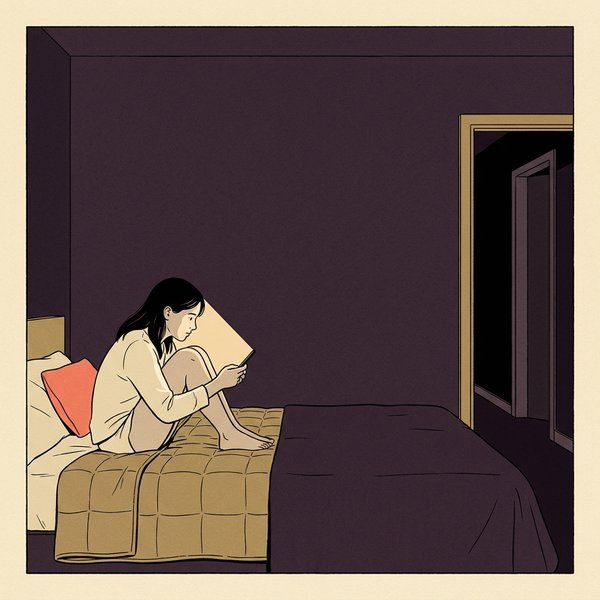 Sociosexuality.org · Audio Anxious Attachment
Part 1 · 47 min Where anxious attachment comes from
Part 2 · 47 min What it does in a relationship
Part 3 · 42 min What the evidence says about change
Why one late reply can feel like the end of the world, and what the science of anxious attachment says about it
+ VAT where applicable
Your phone sits face up on the table, and you keep glancing at it.
You sent them a message a while back, nothing much, just checking in, and there is still no reply from them.
You know they are busy, and you know about that meeting they had. Somewhere in the calmer part of your head you even know that nothing has gone wrong.
But you pick the phone up anyway. You look to see whether they have been online, then go back through this morning's messages, trying to tell if they sounded warmer back then. A second message gets written and deleted, and then you start writing it again.
Then the reply arrives. A short one. And for a moment the relief is so big it almost hurts. Until the next gap.
If any of that is familiar, you have likely asked yourself some hard things already. Why am I like this? Why can I not settle down and relax, and why does knowing better not seem to change anything at all?
Or it might not be you at all. It might be someone you love, who needs to hear it again, and then again, and you have started to wonder if anything you say will ever be enough for them.
The research has something to say about this first, and it's worth hearing. This isn't a flaw in your character. It's a response you learned, and your nervous system picked it up long before you had the words to explain it.
There's a name for this in the research: anxious attachment. It goes back to a British psychiatrist in the late 1950s, who argued that when a baby cries, clings and goes looking for a caregiver who has gone missing, that's a biological instinct at work and not some trick to get fed.
Since then, researchers have gone looking for this pattern in adults, first through a newspaper survey, then a national sample, then more than 10,000 clinical interviews and more than 20,000 observations in the lab. They have followed how it forms, how it shows up between two adults, and what the evidence says about change.
The news from all that research is better than the low hum of dread you might be carrying around, and it's a good deal more useful than any advice anyone has handed you so far.
Hardly anyone lays it out clearly, so we did it ourselves.
What changes after you listen
Once you've listened, that alarm inside you stops running the show, because you'll finally understand what it is and why it goes off.
You will learn where anxious attachment comes from, which for most people is warmth that showed up and then went away again, and that turns out to explain a lot about how you love someone now and what you do when they pull back.
You will learn how common this is: four quite different methods, used across four decades, all come out at roughly one adult in five, so you are far from the odd one out.
You'll have names for what you do when the alarm goes off, the extra messages and the small fights and the strategic silence and the checking, and you'll see why each one gives a little relief for a while and still keeps the whole cycle turning.
You'll see why reassurance can seem like the fix and still leave you wanting more an hour later, and what one diary study of couples found when it looked at this.
You will know what the evidence really says about change: that it is possible, that it is slow, and which approaches have research behind them and which are only popular.
And if someone you love has this pattern, you'll start to read what they do differently, as a bid for contact rather than an attack on you.
No blame and no quick promises here, just the research laid out so you can use it.
Here is some of what you will find out
- The British psychiatrist who as a boy got to see his mother for only one hour a day, and how his idea about babies went on to change the field (Part 1)
- What a newspaper questionnaire in Colorado showed in 1987 about the way adults love (Part 1)
- The first national survey of attachment in American adults, and why the share of anxious adults it found came out lower than the newspaper's (Part 1)
- Why the people who choose to answer a relationship questionnaire might be the ones pushing the anxious numbers up (Part 1)
- Four different methods over four decades, and they keep landing on about the same share of adults whose attachment system runs anxious (Part 1)
- A caregiver who's warm one afternoon and out of reach the next does something different to a child than one who is reliably cold, and here is why (Part 1)
- Why the pull of a slot machine and the pull of a phone that hasn't buzzed yet run on the same mechanism, and what that says about waiting for a text (Part 1)
- How often even attentive parents read a baby's signals right, which turns out to be far lower than most people would guess, and the one other thing that ends up mattering more than getting it right (Part 1)
- The early window when your inner map of relationships gets drawn, and the two sentences it can end up encoding (Part 1)
- Why knowing your pattern in your head doesn't change it by itself, and what has to happen alongside that understanding (Part 1)
- Why your body tends to react before your mind gets a say, and what one theory about the nervous system constantly scanning for danger has to say about that (Part 2)
- The smoke alarm that goes off every time someone makes toast, and why each false alarm makes the next one a little easier to set off (Part 2)
- What researchers saw when anxious infants were reunited with a parent (it was not simple relief) (Part 2)
- The three ways protest goes in adults: pursuing, provoking, and punishing someone by pulling away (Part 2)
- How to tell when someone's silence means they're pulling away, and when it means they're waiting for you to notice them (Part 2)
- Every way you check your phone, from read receipts to scrolling back through old messages for a shift in tone, and the loop that makes each check feel like it paid off (Part 2)
- What 110 couples showed in their daily diaries about reassurance and how much they trusted each other the next day (Part 2)
- Why one kind of watchfulness has ended up being called empathy's evil twin (Part 2)
- Physical abandonment and emotional abandonment come from different places, and both can lead to the same fear (Part 2)
- A 2025 review pulled together 39 studies published between 2000 and 2024, and found something odd: attachment shifted in therapy that was never trying to change it (Part 3)
- We put three ways of measuring attachment side by side in the same 318 people, and they agreed with each other a lot less than you'd think (Part 3)
- Which popular approaches have the weakest evidence, and the coercive therapy that has been linked to deaths and new laws (Part 3)
+ VAT where applicable
- 136 minutes of audio in 3 parts
- A printable PDF workbook
- Plays in your browser on any device, signed in
30-day money-back guarantee. If it is not for you, write to support within 30 days and you get every cent back.
What each part gives you
Part 1 · 47 minutes
Where anxious attachment comes from
This part is about where the alarm comes from. You'll meet John Bowlby, who argued that attachment is a biological instinct, not something a baby learns because someone feeds it. You'll hear the numbers from a Colorado newspaper, from a national survey, from more than 10,000 clinical interviews and more than 20,000 lab observations, and why every one of them lands on roughly one adult in five. Then the difference that matters most: a caregiver who is reliably cold is one thing, but a caregiver who is warm one day and gone the next keeps a child on high alert, and you'll see why. We walk through how the inner map of relationships gets drawn in the first years of life, what early adversity can do to the brain, and why understanding all this doesn't by itself shift the pattern. By the end your own reactions should make sense to you.
You walk away with
- Anxious attachment is something you learned, not a flaw in who you are
- About one adult in five has an attachment system that runs anxious.
- Unpredictable warmth, not coldness, sets the alarm to high
- Fixing a missed signal afterward counts for more than catching every signal the first time.
Part 2 · 47 minutes
What it does in a relationship
This part is about what the alarm does once you are an adult with a partner. You will learn why your body reacts before your reasoning catches up, and why an alarm that is set too sensitively gets easier to trip every time it goes off. You will hear what Bowlby and Robertson saw in separated children, and what Ainsworth found when anxious toddlers were brought back to a parent. Then comes the adult version: pursuing, provoking, punishing withdrawal, the tests that ask a partner to prove they will stay, and the whole list of digital checking. You will see why checking and reassurance bring real relief and still make the next round worse. You will also hear what a diary study of 110 couples found, how fear of abandonment can come from emotional absence as well as physical absence, and how the pattern ties into jealousy and sex. By the end you will recognise the loop when you are in it.
You walk away with
- Protest behaviour is a bid for contact, even when what it does in the moment is push a partner further away.
- Checking and reassurance bring relief, and that relief tightens the loop
- Emotional absence can seed abandonment fear as surely as physical absence
- How the alarm ties into jealousy, sex and the phone you keep reaching for
Part 3 · 42 minutes
What the evidence says about change
This part gets at the question sitting under all the others: can it change? You'll see why a 1998 analysis found attachment behaves like a sliding scale rather than a set of boxes, and why that leaves room for movement. You'll hear why different ways of measuring attachment often don't agree with each other, and what that means for you when someone says an approach works. Then the good news. A 2025 review of 39 studies found most of them showed shifts toward security, even in therapy that was aimed at something else, and the effects were strongest in longer treatment. We walk through where the strongest trial evidence sits, what a programme for families in child welfare found, which popular approaches don't have support behind them, and why one coercive therapy led to deaths and to laws. You come away with a clear, honest picture of how change happens.
You walk away with
- Attachment works on a sliding scale, so there's room built in to move along it.
- In one large review, most therapy studies showed people moving toward security.
- Change is possible, slow and well documented
- How you can tell the approaches with real evidence behind them from the merely popular ones
This is for you if…
- you catch yourself spiralling when a reply comes late and you want to understand where that comes from
- you love someone who keeps needing reassurance and want to make sense of it without running out of patience
- you can see on paper that your fear makes little sense, and you want to understand why knowing better still doesn't turn it off
- you want to know what the research says about whether people change before you put time or hope into something
- you would rather have the research explained clearly than be handed a quick self-help promise
- you have already tried reasoning your way out of the fear, and found it keeps coming back anyway
This is not for you if…
- you want to hear that anxious attachment is some flaw in you, something to feel ashamed about
- you want us to promise that the fear will go away and stay gone
- you're hoping for tactics that get a partner to reply faster or keep them from leaving
- you need a fast fix for a relationship that is in crisis right now
- you would prefer not to be told that real change happens, but slowly
Why you can trust it
We built this title on published research. Most of it rests on Cindy Hazan and Phillip Shaver's 1987 study, the first one to ask whether the attachment patterns seen in infants turn up again in adult love, plus Mikulincer and Shaver's work on attachment in adulthood.
And around that backbone we pull in a lot more. John Bowlby's trilogy Attachment and Loss, and what he and James Robertson saw in children separated from their parents. Mary Ainsworth's work on reunion. A 1997 national survey, a 2009 meta-analysis covering more than 10,000 clinical interviews and a 2023 one covering more than 20,000 lab observations. Brain imaging studies on early adversity, a daily diary study that followed 110 couples, and Meghan Kussman's 2025 review of 39 studies on therapy and attachment.
We don't take a side in any of this, and we tell you where the evidence runs thin. The 1987 study drew on newspaper readers rather than a random sample. The different ways of measuring attachment don't always line up with each other, and some of the most popular approaches rest on the least evidence. You'll hear about those limits right alongside the findings.
Built on the research: Hazan and Shaver (1987); Mikulincer and Shaver's work on attachment in adulthood.
The workbook that comes with it
The workbook is there so that listening turns into noticing. Each part has one page with the key ideas, then questions about your own life: what sets your alarm off, which protest moves you tend to reach for, the kinds of checking you do, and what that checking gives you in the moment.
And if you're listening with a partner, there are questions you can each answer on your own and then compare, which gives the two of you a way to talk about the pattern, rather than fighting inside it.
+ VAT where applicable
- 136 minutes of audio in 3 parts
- A printable PDF workbook
- Plays in your browser on any device, signed in
30-day money-back guarantee. If it is not for you, write to support within 30 days and you get every cent back.
Questions you may have
Is something wrong with me?
No. The research looks at anxious attachment as something learned from early experience, not as a flaw in your character, and about one adult in five has it too. Part 1 goes through how it forms, step by step, so your reactions start to look like sensible answers to the world you grew up in.
Can this help me stop needing so much reassurance?
It shows you why reassurance brings relief and still leaves you wanting more, and what the evidence says about change. It won't promise that the need goes away. Part 3 is honest with you that change is possible, and slow.
My partner is the anxiously attached one. Is this for me as well?
Yes. Part 2 looks at the protest moves from the inside, the testing and the checking, and treats them as bids for contact, not as attacks. Seeing it that way can make it easier for you to respond with patience, and to talk about the pattern together.
Will it blame my parents?
No. It does explain how inconsistent caregiving can shape the alarm, but it also explains that even attentive parents miss a baby's signals a lot of the time, so the aim is to understand where this comes from rather than to blame anyone for it.
Does it cover jealousy and sex?
Yes. Part 2 looks at how anxious monitoring can harden into jealousy, and how sex can turn into a moment of relief from attachment uncertainty. It's research, told clearly and not graphic.
Will it just push one approach on me?
No. Part 3 goes through which approaches have research behind them and which are mostly popular, and it's honest about where the evidence runs thin and where the different attachment measures don't agree, so you can decide for yourself.
Can I listen with my partner?
Yes. When you both hear the same explanation, you end up with a shared, calm way of talking about something that usually surfaces right in the middle of a hard moment. There are questions in the workbook you can each answer and then compare.
How do I listen?
Once you've got your title, it sits in your library right here on the site, and you can play each part in the page itself on your phone, your tablet or your computer, so there's no app you need to install first.
Can I listen in the car, or when I'm out on a walk?
Yes. Open your library on your phone while signed in, and every part plays anywhere you've got a signal. It remembers where you stopped, so you can pause in the car and carry on later.
Do I need a password?
No. You sign in with the same email address you used when you bought, and we send a one-time link to that address so you can get in. You don't have a password to keep track of.
What is the workbook?
There's a PDF you can print to go along with the audio. It sets out the key ideas from each part, gives you questions to answer about your own life, and leaves space to write, either on paper or right on screen if you'd rather not print it.
Is this therapy, or medical advice?
No. It is education: the published research, explained clearly so you can use it. If you are in crisis or need care, a licensed professional is the right next step, and this can sit alongside that work.
What if it is not for me?
Then you get your money back. For 30 days after you buy a title, write to support and we refund you in full. You do not have to give a reason. A membership started at the 6-month price is covered too: the trial charge and the payment for its first months, for 30 days from the trial charge. The plain trial and the monthly membership are not covered by this guarantee.
My card was declined. What now?
Then the money was not taken from your card. Try again in a few minutes, or try another card. If it is declined again, your bank can tell you why: some banks turn down a first payment to a new shop until you say yes in their app. If it still does not go through, write to support and we will help.
So, here is where all of this leaves us.
Your alarm goes off too easily. It may have been there for as long as you can remember, and you may have spent years assuming that this was simply the kind of person you are.
The research is kinder than that. Your alarm got set early, by warmth that came and then went away. Back then it was the right response to the world you lived in, and it is still running on that old setting.
And that setting isn't fixed for life. It won't change overnight, and understanding it isn't enough by itself, but the research shows steady, different experience over time moves people toward security.
You could keep checking the phone and asking what is wrong with you. We'd rather you spent three evenings, or three long walks, learning what is really known.
By the end you'll have words for what goes on inside you when the fear kicks in, a kinder and fairer read on yourself and on the people you love, and a clear picture of which ideas have real evidence behind them and which don't.
That is why we made Anxious Attachment, and we hope you'll give it a listen.
+ VAT where applicable
- 136 minutes of audio in 3 parts
- A printable PDF workbook
- Plays in your browser on any device, signed in
30-day money-back guarantee. If it is not for you, write to support within 30 days and you get every cent back.
P.S. Anxious attachment isn't a flaw in your character. It's something you learned, a response to warmth that came and went without warning, and roughly one adult in five shares it. The evidence says it can shift with time, too. In this title we show you where it comes from, what it does to you, and what helps.